.avif)

Hard Water in Kitsap County and Its Effect on Your Faucets by Summer's End
The Late-Summer Faucet Frustration in Silverdale Homes
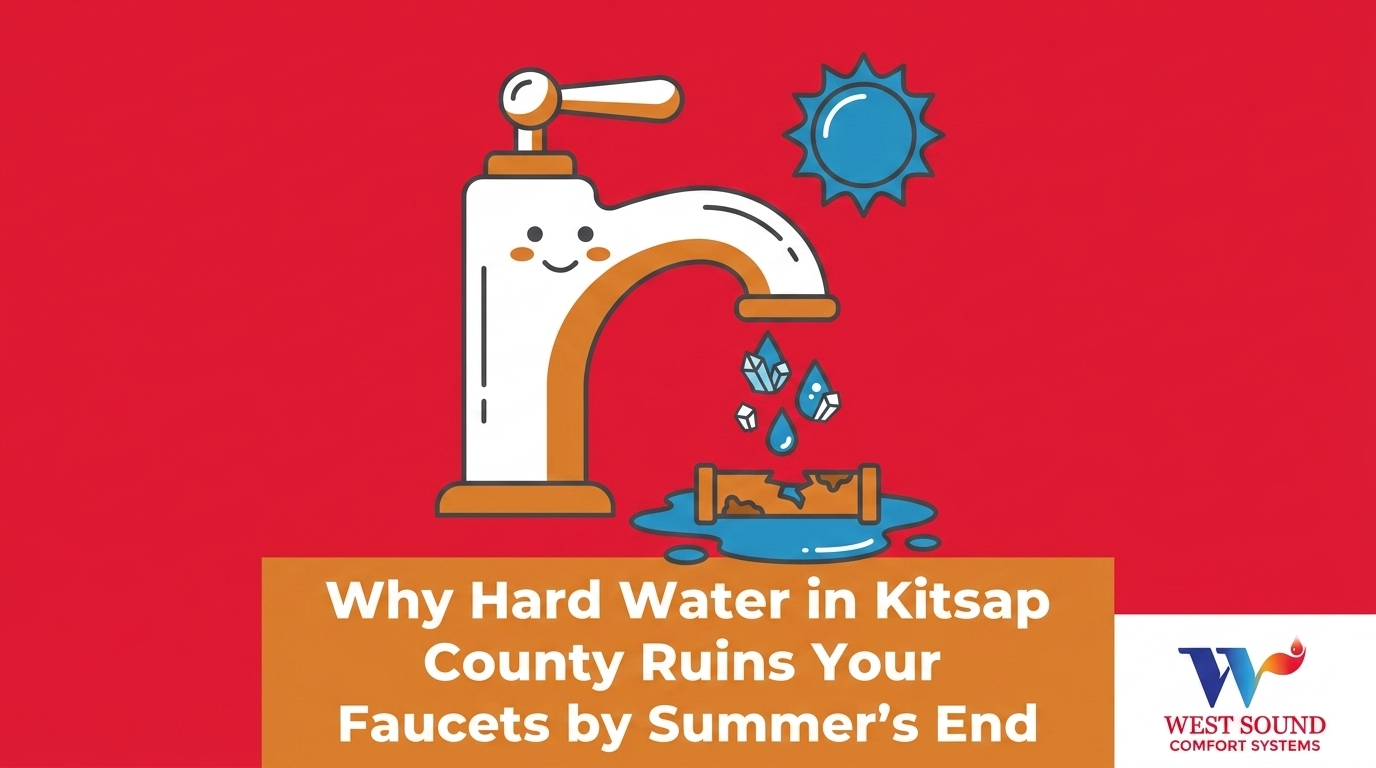
Before the fall weather arrives, there is a specific plumbing issue that sneaks up on local homeowners: Hard Water in Kitsap County and Its Effect on Your Faucets by Summer's End. At West Sound Comfort Systems, our team typically receives a surge of calls when a customer's kitchen sink takes twice as long to fill a pot, or when a white, crusty substance begins forming around their bathroom aerators. The water pressure drops right when the household is getting busy during the late summer (August) back-to-school transition. This sudden change can make it feel like your fixtures are failing all at once, but in our experience, the reality is often tied directly to seasonal shifts in the local municipal water supply.
What you are seeing is not necessarily a broken faucet, but a compounding local water quality issue that peaks during the driest months of the year. While temporary fixes exist, protecting your home requires comprehensive home comfort services and professional plumbing solutions to address the root cause of the mineral buildup.
The Shift to Groundwater: Kitsap County's Seasonal Water Quality
As local plumbing experts serving the Silverdale area, we know that to understand why your faucets suddenly struggle late in the season, you have to look at where your water comes from. The municipal water sources serving Kitsap County undergo a significant shift during the driest months. August is historically one of the driest months in the Pacific Northwest, and this lack of rainfall directly causes municipal systems to pull heavier from different reserves to meet high demand.
Understanding the Kitsap Public Utility District Supply
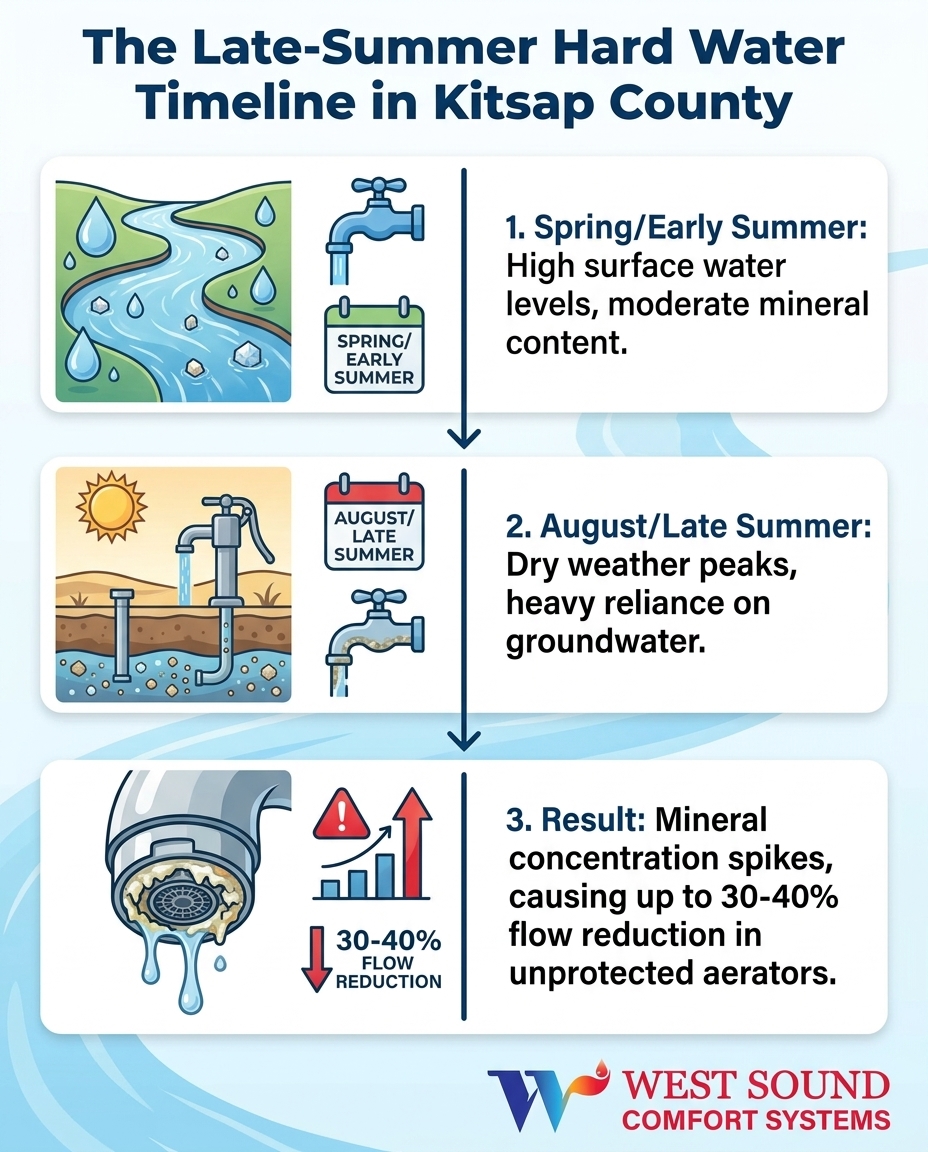
During the wetter spring and early summer, surface water sources make up a large portion of the municipal supply. These sources are generally softer. However, as surface water levels drop, the utility district relies more heavily on deep groundwater aquifers. These underground reservoirs naturally contain much higher concentrations of dissolved calcium and magnesium because the water has spent decades filtering through layers of rock and soil.
Why Dry Weather Changes Your Water Chemistry
The direct correlation between lack of rainfall and mineral concentration means that by the time late summer arrives, the water entering your home is noticeably harder. This seasonal shift temporarily spikes mineral levels right when residential water usage—from hosting end-of-season guests to washing back-to-school clothes and watering gardens—is at its absolute peak.
• Spring conditions: Abundant rainfall keeps surface water levels high, diluting the mineral content in the overall water supply.
• Mid-summer transition: As rain stops, surface reservoirs lower, and pumps begin drawing deeper into groundwater aquifers.
• Late-summer peak: The highest concentration of dissolved calcium and magnesium enters your home's plumbing system, accelerating scale formation.
How Peak Seasonal Use Accelerates Mineral Scaling on Fixtures
When our plumbers inspect fixtures in the late summer, we consistently see that dissolved minerals do not just pass through harmlessly. They precipitate out of the water and cling to the metallic and plastic surfaces of your plumbing fixtures. Because summer brings higher water usage, a greater volume of water passes through your faucets, leaving behind a larger deposit of these minerals.
The Mechanics of Calcium and Magnesium Buildup
As water exits the faucet, the sudden change in pressure and exposure to air causes calcium and magnesium to crystallize. Initially, this forms a soft scale—a chalky residue that easily wipes away. However, as layers of this scale build upon one another, it hardens into a cement-like substance that strongly bonds to the fixture's finish and internal components.
Why Aerators Clog Faster During High Usage
The aerator screen at the tip of your faucet is designed to mix air into the water stream, but its fine mesh also acts as a trap for precipitated minerals. The visible chalky mineral buildup on aerators is just the tip of the iceberg. Over time, we have seen this buildup restrict water flow by up to 30 to 40 percent. The more water you use during the hot months, the faster this restriction compounds, turning a steady stream into an erratic spray.
The Band-Aid Approach: Why Vinegar Soaks Aren't a Permanent Fix
When our team arrives to address low water pressure, homeowners often tell us their first response was to unscrew the aerator and soak it in household acids like white vinegar. While this is an effective short-term trick for dissolving the surface scale, it is ultimately just a band-aid on a much larger issue.
The limitations of DIY soaking:
• It ignores the source: Dissolving the scale on the tip of the faucet does nothing to stop the continuous flow of hard water from depositing new minerals the very next day.
• It risks finish damage: Repeatedly exposing high-end plumbing fixtures to acidic solutions can strip away protective coatings, leading to tarnished finishes and pitting on brushed nickel or oil-rubbed bronze.
• It misses internal components: Vinegar cannot reach the internal cartridges and valves where the most damaging scale buildup occurs.
Relying on vinegar soaks means committing to an endless cycle of monthly scrubbing. When you are constantly battling the visible chalky mineral buildup on aerators, it is usually the catalyst for seeking a permanent, whole-home solution from our professionals.
Beyond the Faucet: The Hidden Threat to Boilers and Water Heaters
If hard water is visibly ruining your faucets, you can be certain it is silently damaging the expensive HVAC and water heating equipment hidden in your utility room or basement. The same hard water flowing through the Silverdale area in Kitsap County is also filling your water heater and boiler systems.
Scaling Inside Heat Exchangers
Heat acts as a catalyst for mineral precipitation. When hard water enters a boiler or water heater, the high temperatures cause calcium and magnesium to drop out of the water at a much faster rate than at the cold-water tap. This process, known as thermal scaling, coats the inside of heat exchangers and heating elements with a thick layer of rock-hard scale.
Because scale is an excellent insulator, a layer just a few millimeters thick forces the system to work significantly harder to transfer heat to the water. This results in longer heating cycles, higher energy consumption, and a drastically reduced lifespan for the equipment. If scaling has permanently damaged your system, replacing it with a high-efficiency model could make you eligible for generally applicable energy rebates or federal tax credits; we always advise readers to verify current programs with their utility or a tax professional.
The Multi-Trade Connection: HVAC and Plumbing
Working with a multi-trade contractor like West Sound Comfort Systems means you get a comprehensive view of your home's mechanical health. While our plumbers see the immediate damage to faucets and showerheads, our HVAC technicians see the exact same hard water destroying boiler efficiency. A pattern we see often is during late-summer maintenance appointments: a local homeowner schedules an August tune-up on a boiler with radiant baseboard heaters to prep for the cooler fall months. Our technician arrives on time and performs the maintenance professionally, taking the opportunity to inspect the system for thermal scaling. Catching these hard water impacts early through Silverdale boiler repair and maintenance prevents catastrophic heating failures when you need comfort the most.
Whole-Home Water Treatment Options for Silverdale Residents
To break the cycle of scrubbing aerators and replacing damaged heating elements, we recommend treating the water before it ever reaches your fixtures. Whole-home water treatment is the definitive answer to the hard water spike that occurs during the late summer (August) back-to-school transition.
Water Softeners vs. Conditioners
When considering whole-home treatment, we help homeowners choose between traditional softeners and modern conditioners. Both protect your plumbing, but they operate using entirely different scientific principles.
• Ion-Exchange Water Softener — How It Works: Physically removes calcium and magnesium ions and replaces them with sodium or potassium ions. — Primary Benefit: Completely eliminates scale, creates a slippery feel to the water, and allows soaps to lather easily.
• Salt-Free Water Conditioner — How It Works: Alters the structure of the minerals so they cannot stick to surfaces, without actually removing them. — Primary Benefit: Prevents scale buildup inside pipes and appliances without requiring salt refills or wastewater discharge.
Protecting Your Home's Infrastructure
Treating the water at the point of entry protects every single faucet, showerhead, dishwasher, and boiler in the home. However, it is vital to have these systems professionally installed. Our specialists will ensure the equipment is properly sized for your specific water chemistry and household usage rates. Exploring specialty plumbing services guarantees that your treatment system will handle the seasonal shifts in local water quality without interrupting your flow rate.
Recognizing the Signs of Severe Plumbing Damage
Our team knows there comes a point when a DIY fix is no longer viable and professional intervention is urgently needed. If you have ignored the hard water symptoms for several seasons, the damage may have progressed beyond the aerator and into the vital mechanisms of the fixture itself.
When Low Pressure Indicates Permanent Damage
If you remove the aerator and the water pressure remains weak, the problem is deeper inside the plumbing. Severe mineral buildup can completely block supply lines or ruin shut-off valves under the sink. Ignoring severely restricted flow puts unnecessary strain on the pipe joints, which can eventually lead to leaks.
Assessing the Integrity of Faucet Cartridges
Modern faucets use internal cartridges with ceramic discs to control water flow and temperature. Hard water acts like liquid sandpaper on these components. Symptoms of severe internal damage include:
• Stiff faucet handles: When the handle becomes difficult to turn, scale has infiltrated the moving parts.
• Squeaking or grinding noises: The sound of calcium scratching against the ceramic discs inside the valve.
• Constant dripping: Once the ceramic discs are scored and scratched, they can no longer form a watertight seal, leading to a persistent drip.
Forcing a stuck handle can cause a sudden leak or break the fixture entirely. If you notice the visible chalky mineral buildup on aerators is accompanied by stiff handles or persistent dripping, it is time to stop attempting DIY cleaning. Call our professionals to prevent the situation from turning into one of those stressful plumbing emergencies that damages your cabinetry or flooring.
Securing Your Home's Plumbing for the Seasons Ahead
It is important to remember that the hard water issues you face are a natural byproduct of the local environment. The Silverdale area in Kitsap County naturally experiences harder water in late summer, and the resulting damage to your fixtures is not a reflection of poor home maintenance. It is simply a geographical reality of relying on groundwater during dry spells.
However, you do not have to accept ruined faucets and inefficient boilers as a permanent condition. Whole-home water treatment is the only reliable way to stop the endless cycle of scrubbing, soaking, and replacing expensive fixtures. By seeking an expert assessment from West Sound Comfort Systems, you can determine the exact treatment system needed to protect your plumbing infrastructure, ensuring your water flows freely and your appliances operate smoothly for years to come.
Frequently Asked Questions
Why is my faucet water pressure suddenly low in late summer?
Your water pressure often drops in late summer due to severe mineral scaling inside the faucet aerator. During this time, municipal water systems rely more heavily on groundwater, which has a higher concentration of calcium and magnesium. The combination of increased water usage and harder water causes scale to build up rapidly, physically blocking the flow of water.
Does Silverdale have hard water?
Yes, Silverdale experiences moderately hard to hard water, especially during the late summer months. When rainfall decreases, the local utility district shifts from surface water to deep well aquifers to meet demand. These aquifers naturally contain higher levels of dissolved minerals that cause hard water symptoms in your home.
How does hard water affect plumbing fixtures over time?
Hard water leaves behind dissolved minerals that harden into a cement-like scale on your fixtures. Over time, this scale clogs aerators, tarnishes metallic finishes, and acts like sandpaper on internal moving parts. If left untreated, it can permanently ruin faucet cartridges and require complete fixture replacement.
Can mineral buildup permanently damage my faucet cartridges?
Yes, severe mineral buildup can cause irreversible damage to the internal cartridges of a faucet. The hard calcium deposits score and scratch the delicate ceramic discs inside the valve that control water flow. Once these discs are scratched, the faucet will leak continuously and the cartridge must be replaced.
What is the difference between a water softener and a water conditioner?
A water softener physically removes calcium and magnesium from the water by exchanging them with sodium ions, completely eliminating scale. A water conditioner, on the other hand, alters the chemical structure of the minerals so they cannot stick to your pipes or fixtures, but it leaves the minerals in the water. Both systems protect your plumbing, but they use entirely different methods to achieve results.
Trusted by Your Neighbors


Featured Manufacturer

Related Blogs
Upgrading to a Tankless Water Heater Before the Teenage Years Hit
Scheduling Your Back-to-School Plumbing Check: Avoiding Morning Shower Shortages