.avif)

Repairing an R-22 AC Unit vs. Upgrading to a Modern Heat Pump This Summer

The Summer Breakdown: Facing an R-22 Leak When You Need Cooling Most
If you find yourself weighing the options of Repairing an R-22 AC Unit vs. Upgrading to a Modern Heat Pump This Summer, it often starts with a simple question: is your air conditioner actually broken, or is it just struggling to keep up with the July peak cooling load? You check the thermostat, and it reads a stubborn 80 degrees while the vents blow lukewarm air. When a technician arrives and diagnoses a refrigerant leak in your aging system, you are immediately faced with a frustrating reality: your unit runs on R-22, an obsolete refrigerant that is no longer manufactured. You now have a critical choice to make about your home comfort.
At West Sound Comfort Systems, we regularly help homeowners navigate this exact dilemma. You can either invest in a scarce, temporary R-22 recharge to limp through the rest of the season, or you can upgrade to modern heat pump systems that offer superior efficiency and reliability. This decision guide will break down the true costs, mechanical realities, and long-term benefits of both options so you can make an informed, objective choice for your home.
The Reality of R-22 (Freon) in Today's HVAC Landscape
To understand why an R-22 leak is such a significant issue, you have to look at the shifting landscape of environmental regulations and HVAC manufacturing. As of January 1, 2020, the Environmental Protection Agency (EPA) officially banned the production and import of R-22 refrigerant in the United States. This ozone-depleting substance, commonly known as Freon, was the standard for decades, but its environmental impact led to a mandatory phase-out.
Because no new R-22 is entering the market, the only available supply comes from recovered and recycled quantities. This extreme scarcity makes recharging an older system increasingly impractical. When your air conditioner faces the intense mechanical stress of a July peak summer cooling load, aging compressors and deteriorating coils are pushed to their limits, frequently exposing micro-leaks that allow this precious refrigerant to escape.
Choosing to recharge a leaking R-22 system often triggers the sunk-cost fallacy. Homeowners pay a premium for a temporary patch, hoping to squeeze one more season out of a failing unit, only to face another breakdown weeks later. If you are trying to decide between HVAC repair and replacement, it is critical to recognize that adding refrigerant does not fix the underlying deterioration of the equipment.
Why R-22 Leaks Are Rarely a "One-Time" Fix
The mechanics of corrosion: The copper coils inside your air conditioner degrade over time due to a chemical reaction called formicary corrosion. This process creates microscopic pinholes in the metal. Our technicians consistently see that when one leak develops, it is almost a guarantee that the rest of the coil is similarly compromised. Fixing a single pinhole is like putting a bandage on a rusting pipe; another leak will inevitably appear.
Environmental and operational waste: Topping off a system without repairing the compromised coil means that the expensive R-22 you just purchased will eventually leak back into the atmosphere. Furthermore, running an air conditioner with low refrigerant levels forces the compressor to work twice as hard, leading to overheating, higher energy consumption, and eventual catastrophic failure.
Why Modern Heat Pumps Outperform Aging AC Units
A modern heat pump is a highly advanced HVAC system that moves heat rather than generating it. During the summer, it operates exactly like an air conditioner, extracting heat from inside your home and pumping it outdoors. However, the technology driving this process has evolved dramatically since your 15-year-old R-22 unit was manufactured.
Today's systems are measured by SEER2 (Seasonal Energy Efficiency Ratio 2) ratings. While an aging R-22 air conditioner might operate at a sluggish 10 or 12 SEER, modern heat pumps frequently boast ratings of 15, 18, or even 20+. This leap in efficiency means the system requires a fraction of the electricity to produce the exact same amount of cooling. Additionally, modern units utilize eco-friendly refrigerants that are widely available, heavily regulated for safety, and significantly better for the environment.
The climate in Silverdale WA and the greater Kitsap Peninsula is experiencing increasingly warm, muggy summers. This shift makes indoor humidity control just as important as temperature control. Modern heat pumps excel in this area due to variable-speed compressor technology. Instead of blasting on at 100% capacity and shutting off abruptly like older single-stage units, variable-speed heat pumps run continuously at lower speeds. This longer runtime allows the system to pull significantly more moisture out of the air, providing superior dehumidification and eliminating that sticky, clammy feeling inside your home.
Year-Round Utility in the Pacific Northwest
Consolidated home comfort: Unlike a standard air conditioner that sits completely idle for six months of the year, a heat pump reverses its operation in the winter. It extracts ambient heat from the outdoor air and moves it inside, providing highly efficient heating during the mild Pacific Northwest winters.
Simplified maintenance: By consolidating your heating and cooling into a single, unified system, you streamline your long-term maintenance needs. You only have to worry about servicing one piece of primary mechanical equipment, reducing the likelihood of unexpected winter furnace failures.
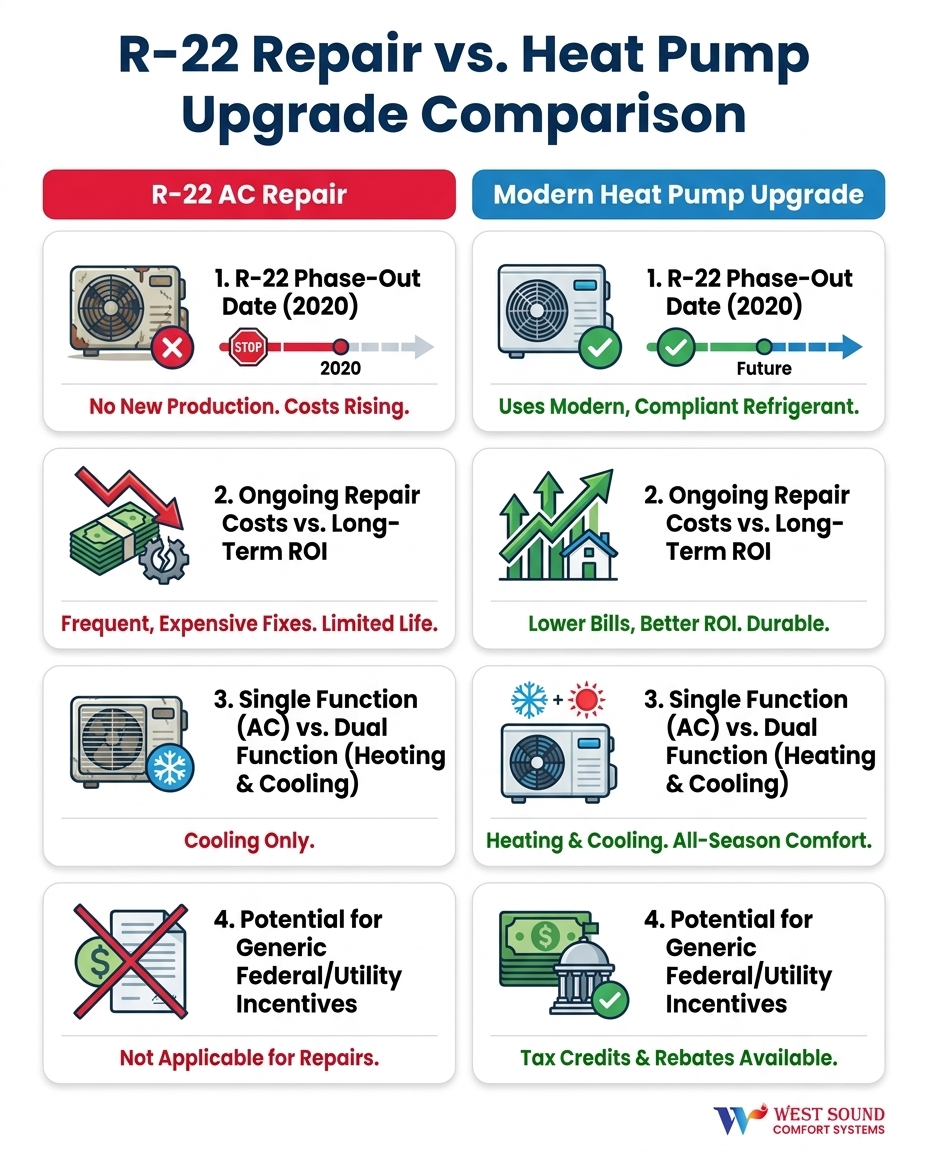
Side-by-Side Comparison: Patching R-22 vs. Installing a Heat Pump
When you are sweating through a summer heatwave, it can be tempting to choose the fastest apparent fix. However, looking at the objective differences between a temporary repair and a total system upgrade reveals a stark contrast in long-term value, reliability, and peace of mind.
• Reliability — Patching an Aging R-22 AC Unit: Low. Aging coils are prone to secondary leaks and compressor failure under heavy summer loads. — Upgrading to a Modern Heat Pump: High. Brand new components engineered for continuous, peak-season operation.
• Energy Efficiency — Patching an Aging R-22 AC Unit: Poor. Older units draw excessive power, especially when struggling with low refrigerant levels. — Upgrading to a Modern Heat Pump: Excellent. High SEER2 ratings and variable-speed technology minimize electricity consumption.
• Environmental Impact — Patching an Aging R-22 AC Unit: Negative. Uses ozone-depleting R-22 that risks leaking back into the atmosphere. — Upgrading to a Modern Heat Pump: Positive. Utilizes modern, eco-friendly refrigerants and reduces overall energy demand.
• Warranty Protection — Patching an Aging R-22 AC Unit: None. You assume 100% of the financial risk for the next inevitable breakdown. — Upgrading to a Modern Heat Pump: Comprehensive. Backed by robust manufacturer warranties covering parts and compressors.
• Functionality — Patching an Aging R-22 AC Unit: Single-purpose. Only provides cooling during the summer months. — Upgrading to a Modern Heat Pump: Dual-purpose. Provides high-efficiency cooling in summer and heating in winter.
The Pros and Cons at a Glance:
• Pro of Repair: The immediate, upfront transaction is smaller than a full installation.
• Con of Repair: The repair is a temporary band-aid; you are investing in obsolete technology with zero warranty protection.
• Pro of Replacement: You gain immediate reliability, drastic improvements in indoor air quality, superior dehumidification, and lower month-to-month energy consumption.
• Con of Replacement: Requires a larger initial commitment and scheduling a full installation process.
The Hidden Upgrade Factor: Electrical Panel Requirements
One critical element that many homeowners—and even some contractors—overlook during an HVAC upgrade is the electrical logistics of the home. Transitioning from a standard air conditioner or older baseboard heating to a central, high-efficiency heat pump often requires modifications to your home's electrical panel.
Modern heat pumps, along with their associated indoor air handlers and auxiliary heat strips, pull specific amperages to operate safely and efficiently. If you live in an older home in Silverdale WA, your current electrical panel might be maxed out or lack the necessary dedicated circuits to support the new equipment. Upgrading your HVAC system without ensuring your electrical infrastructure can handle the load is a serious safety hazard and a violation of local building codes.
For many homeowners, this creates a frustrating bottleneck. You hire an HVAC company to replace your failing AC, only to be told halfway through the project that you need to go find, hire, and schedule a separate electrician to upgrade your panel before the installation can continue. This third-party delay leaves your home without air conditioning for days or even weeks during the hottest part of the year.
Streamlining Your Installation Process
Working with a multi-trade contractor eliminates this hidden frustration. Because our team at West Sound Comfort Systems offers dual capabilities in both HVAC and electrical services, we ensure the entire upgrade process is handled smoothly under one roof.
1. Comprehensive Assessment: During the initial visit, technicians evaluate both your ductwork and your electrical panel capacity simultaneously.
2. Seamless Coordination: If electrical panel upgrades are required, the mechanical and electrical teams coordinate their schedules internally, ensuring permits are pulled and work is completed without third-party delays.
3. Faster Comfort: By managing the entire project from start to finish, downtime is drastically reduced, getting your home back to comfortable temperatures safely and efficiently.
Navigating Incentives to Offset Replacement Hesitation
It is entirely normal to feel hesitation when faced with a major home upgrade. However, the transition to high-efficiency heat pump technology is currently supported by a variety of generic incentive programs designed to make the investment more accessible and offset that initial reluctance.
Because modern heat pumps significantly reduce the strain on the electrical grid during peak summer months and align with broader environmental goals, various entities offer financial rewards for homeowners who make the switch from obsolete equipment.</p
• Federal Tax Credits: Under current energy initiatives, upgrading to a qualifying high-efficiency heat pump may make you eligible for federal tax credits. These credits are designed to reward homeowners for making energy-efficient home improvements and can be claimed when you file your annual taxes.
• Local Utility Rebates: Many regional utility providers offer rebate programs for installing energy-efficient HVAC equipment. These utility companies prefer to incentivize efficiency rather than build new power plants to handle peak summer demand.
• Professional Guidance: Because incentive programs, efficiency requirements, and tax codes frequently change, it is highly recommended to consult with your HVAC provider to identify qualifying equipment, and then verify your eligibility with a qualified tax professional before making your final decision.
Making the Right Call Before the Next Heat Wave
Deciding how to handle a failing air conditioner ultimately comes down to diagnosing the specific nature of the breakdown. If your system is relatively young and experiences a minor electrical failure—such as a blown dual-run capacitor, a faulty contactor, or a worn-out condenser fan motor—scheduling professional AC repair services is absolutely the right call. These are standard mechanical wear-and-tear issues that do not impact the sealed refrigerant circuit.
However, if your aging system is diagnosed with an R-22 refrigerant leak, the diagnosis is almost always terminal. The combination of obsolete technology, environmental bans, and the physical degradation of the copper coils makes repairing a leak a poor investment. The sunk-cost fallacy traps homeowners into spending heavily on a doomed system right when the July peak summer cooling load is guaranteed to push that system to its breaking point.
The key to maintaining your home's comfort is proactive decision-making. Waiting for a total, catastrophic breakdown in the middle of a 95-degree heatwave leaves you scrambling for emergency services and limits your ability to thoughtfully research your options. By recognizing the signs of an obsolete, failing system early, you can take control of the upgrade process on your own timeline.
Frequently Asked Questions About R-22 and Heat Pump Upgrades
Is it worth fixing an R-22 AC unit?
Generally, no, it is not worth fixing an R-22 unit if the repair involves the sealed refrigerant circuit. Because the EPA has banned the production of R-22, the remaining supply is incredibly scarce and expensive. Paying for a temporary patch on a deteriorating coil is a poor long-term investment compared to upgrading to modern equipment.
Can I still get R-22 for my AC?
While recovered and recycled R-22 does exist, no new R-22 has been produced or imported into the United States since 2020. This means supplies are strictly limited to whatever is currently in circulation. As this supply continues to dwindle, sourcing R-22 for a recharge becomes increasingly difficult and cost-prohibitive.
Can I put a different refrigerant in an R-22 system?
No, HVAC systems are engineered to operate at specific pressures with specific refrigerants. While some "drop-in" replacement refrigerants exist on the market, using them often requires changing out internal components like the expansion valve. Furthermore, mixing refrigerants degrades system performance, risks catastrophic compressor failure, and immediately voids any remaining manufacturer warranties.
Do I need an electrical upgrade for a heat pump?
It depends entirely on your home's current electrical panel capacity. Many older homes were built with 100-amp panels that cannot safely support the additional load of a modern central heat pump and its auxiliary heating strips. A professional assessment will determine if a panel upgrade is required to meet current safety codes.
Why are heat pumps better than traditional air conditioners?
Heat pumps offer superior versatility and efficiency because they provide both high-performance cooling in the summer and energy-efficient heating in the winter. Additionally, modern heat pumps utilize variable-speed technology, which provides exceptional dehumidification, quieter operation, and significantly lower month-to-month energy consumption compared to traditional single-stage air conditioners.
Secure Your Summer Comfort with a Reliable System Upgrade
Walking into a hot, humid house because your obsolete air conditioner finally gave out is a stressful experience, but the solution doesn't have to be. Choosing to move away from unreliable R-22 technology provides immediate peace of mind, ensuring your home remains consistently cool and comfortable no matter how high the summer temperatures climb.
By partnering with a multi-trade contractor who can seamlessly handle both the mechanical installation and any necessary electrical panel upgrades, you eliminate the hassle of third-party delays. Don't wait for the next major heatwave to force your hand. Take control of your home comfort today and explore your options for AC and heat pump replacement in Silverdale to secure reliable, high-efficiency cooling for years to come.
Trusted by Your Neighbors


Featured Manufacturer
Related Blogs

What Should My Thermostat Be Set To When I Leave for Summer Vacation?

The Hidden Link Between Your Attic Insulation and High Summer Cooling Bills