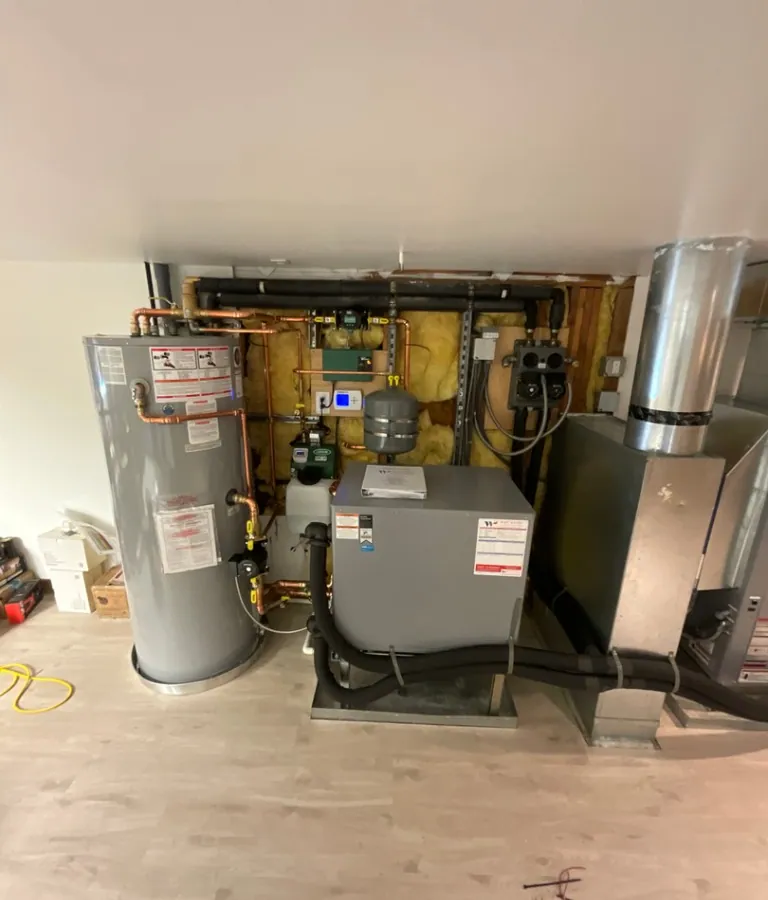
Switching from tank to tankless what to know comes down to a handful of key decisions — and getting them right before installation day saves you time, money, and frustration.
Here's a quick overview of what to expect:
If your current tank is aging, your energy bills are climbing, or you're tired of running out of hot water mid-shower, switching to a tankless system is worth a serious look. But it's not a simple swap — it's a home infrastructure upgrade that requires careful planning.
That's especially true here on Washington's Olympic Peninsula, where homes vary widely in age, plumbing setup, and water quality. What works in a newer Silverdale home may need a completely different approach in an older Bremerton house.
I'm Ernie Bogue, co-owner of West Sound Comfort Systems, and I've been working in the plumbing and heating trades since the late 1980s — long enough to have seen every variation of tank-to-tankless conversion you can imagine. In this guide, I'll walk you through everything about switching from tank to tankless what to know, so you can make a confident, informed decision for your home.

Making the jump to an on-demand system is a popular choice for homeowners in Kitsap County, and for good reason. The most immediate benefit is the elimination of "standby loss." Traditional tanks sit in your garage or closet, constantly reheating 40 to 80 gallons of water just in case you need it. A tankless unit only fires up when you turn on a tap.
When considering a Water Heater Replacement, the longevity of the system is a major selling point. While a standard tank usually starts showing its age around the 10-year mark, a well-maintained tankless unit can easily last 20 years or more. Furthermore, because these units are roughly the size of a carry-on suitcase and mount to the wall, many of our neighbors in places like Kingston and Indianola use the switch to reclaim valuable floor space in their utility rooms or basements.
To get the performance you expect, you have to look past the brand name and focus on the technical specs. The two most important numbers are Flow Rate (GPM) and Temperature Rise.
We’ve seen a few "DIY-gone-wrong" scenarios over the years. The most frequent mistake is undersizing the unit. A unit that works perfectly in a warm climate like Arizona will struggle to keep up with a family of four during a chilly Port Angeles winter.
Another common pitfall is ignoring the gas lines. A tankless unit requires a massive burst of energy the moment it turns on—often 150,000 to 199,000 BTUs. Your old tank likely only needed about 40,000 BTUs. If your gas line is too small, the unit will starve for fuel and fail to reach the set temperature. Finally, skipping the annual flush is a recipe for disaster. Without it, calcium and magnesium will "bake" onto the heat exchanger, eventually causing the unit to overheat and fail prematurely.
If you’ve noticed a puddle around the base of your heater or your morning shower is turning lukewarm faster than it used to, you are likely asking: Is Your Water Heater on Its Last Legs? In Port Orchard, where many homes feature older plumbing, tank failure is a real concern.
Traditional tanks suffer from internal corrosion. Inside every tank is an "anode rod" designed to attract corrosive elements so the tank doesn't rust. Once that rod is depleted, the tank is next. Nearly 75% of tank heaters eventually burst or leak, which can spill 30 to 80 gallons of rusty water into your home. The average water heater flood causes between $4,000 and $10,000 in damage.
Switching to tankless eliminates this flood risk because there is no massive reservoir to burst. If your tank is over 10 years old, or if you see "rusty" water when you first turn on the tap, it’s the perfect time to evaluate a tankless conversion before an emergency forces your hand.
Bremerton has a wonderful mix of historic homes and modern builds, but older homes often require specific upgrades to handle modern tankless technology. When we perform Water Heater Repair Bremerton WA, we always check the existing infrastructure first.
Sizing is all about peak demand. You need to imagine the busiest 15 minutes in your household. Is someone showering while the laundry is running? That is your target GPM.
| Fixture Type | Average Flow Rate (GPM) |
|---|---|
| Low-Flow Showerhead | 1.5 - 2.0 |
| Standard Showerhead | 2.5 |
| Bathroom Faucet | 0.5 - 1.5 |
| Kitchen Faucet | 1.0 - 2.2 |
| Dishwasher | 1.0 - 2.0 |
| Washing Machine | 1.5 - 2.5 |
For a typical family in Sequim or Gig Harbor, a unit capable of 5 to 7 GPM is usually sufficient for two simultaneous showers. However, if you have a large soaking tub or a "rain" showerhead (which can pull 5.0 GPM on its own), you may need a larger unit or even two units piped in parallel. Remember to account for our local groundwater temperature; because our water starts at about 45°F in the winter, the heater has to work harder than it would in a southern state.
In areas like Mason County or parts of Poulsbo, "hard water" is a common issue. Hard water contains high levels of dissolved minerals like calcium. When this water is heated, the minerals solidify and create "scale" inside the heat exchanger.
Think of scale like cholesterol in an artery; it narrows the passage and makes the system work harder. To keep your system running efficiently, we recommend Water Heater Repair Poulsbo WA services that include an annual flushing.
During a flush, we circulate a food-grade descaling solution through the unit for about an hour to dissolve mineral buildup. If your water is particularly hard (above 7 grains per gallon), we strongly suggest installing a water softener. This protects not just your new water heater, but all your appliances and fixtures from scale damage.
This is a common misconception. "Tankless" means endless hot water, but not necessarily instant. The water still has to travel from the heater to your faucet. You may also experience a "cold water sandwich"—a brief burst of cold water if you turn the shower off and then right back on. This happens because a small amount of unheated water stays in the heat exchanger during the pause. To get truly instant hot water, we can install a recirculation pump that keeps hot water moving through your pipes.
Yes, but it is a significant conversion. We will need to run a new gas line from your meter to the heater location and create a new venting route through an exterior wall or the roof. We also have to ensure your gas meter has the capacity to handle the increased BTU load. While the initial setup is more complex, many homeowners in the Olympic Peninsula prefer gas for its higher flow rates and faster recovery times.
A standard tank-to-tank swap usually takes 2 to 4 hours. A tankless conversion is more involved and typically takes 6 to 10 hours. This time includes removing the old tank, mounting the new unit, upgrading gas or electrical lines, installing the new venting system, and performing rigorous safety tests. We also handle the permitting process with the local building department to ensure everything is up to code.
Switching to a tankless system is one of the smartest upgrades you can make for your home's efficiency and comfort. By eliminating the risks of tank failure and providing an endless supply of hot water, you’re investing in long-term peace of mind.
At West Sound Comfort, we’ve spent over 30 years helping our neighbors across Kitsap, Pierce, Mason, Clallam, and Jefferson Counties navigate these big home decisions. Whether you’re in Bremerton, Port Townsend, or Belfair, our team is ready to provide an honest assessment of your home’s infrastructure. We stand behind our work with a 5-year warranty on parts and labor, ensuring your new system provides comfort for decades to come.
Ready to reclaim your closet space and stop worrying about cold showers? Contact us today to discuss your Water Heater Replacement options and see if a tankless system is the right fit for your family.