.avif)

The Complete Guide to How to Decide Between Repair and Replacement
When Is It Time to Stop Repairing and Start Replacing?
Knowing how to decide between repair and replacement is one of the most financially important decisions a homeowner can face — and most people are making it without the right information. Here is a quick-reference guide to help you start thinking through the decision before diving into the details:
Quick Decision Guide: Repair vs. Replace
• Repair cost vs. replacement cost — Lean Toward Repair: Below 50% of replacement cost — Lean Toward Replacement: Above 50% of replacement cost
• Equipment age vs. expected lifespan — Lean Toward Repair: Under 60% of expected lifespan — Lean Toward Replacement: Over 75% of expected lifespan
• 5,000 Rule (age × repair cost) — Lean Toward Repair: Result under $5,000 — Lean Toward Replacement: Result over $5,000
• Repair frequency (last 2 years) — Lean Toward Repair: First or second repair — Lean Toward Replacement: Third or more repair
• Safety hazard present — Lean Toward Repair: No hazard identified — Lean Toward Replacement: Gas leak, CO risk, electrical fault
• Efficiency loss — Lean Toward Repair: Minor or none — Lean Toward Replacement: 20–30% higher energy bills
The decision rarely comes down to just one number. A repair quote might look affordable on the surface, but when you factor in your system's age, how many times you have already called for service, and how much your energy bills have climbed, the math can shift quickly. That is exactly the kind of full-picture thinking this guide is built around.
I'm Ernie Bogue, co-owner of West Sound Comfort Systems, and after more than three decades in the trades — starting as a plumbing apprentice and building deep expertise in hydronic heating and home comfort systems — I have helped hundreds of homeowners across Kitsap County work through how to decide between repair and replacement with confidence rather than guesswork. Let's walk through the frameworks, rules of thumb, and real-world factors that lead to smarter decisions.
How to Decide Between Repair and Replacement Using Financial Rules of Thumb
When a vital home system breaks down, emotions can run high. You are looking at a system that has quietly kept your family warm or supplied hot water, and suddenly you are faced with a choice that could cost hundreds or thousands of dollars. To take the emotion out of the equation, we rely on established financial rules of thumb.
While these rules originated in heavy industry, military logistics, and disaster management, they translate beautifully to residential properties. Whether we are looking at a commercial facility or a cozy home in Poulsbo, the core question remains: Is this repair a sound investment, or are we throwing good money after bad?
To help you visualize these frameworks, we have compiled the most common industry-standard benchmarks used to guide the decision process:
Comparison of Industry-Standard Decision Rules
• The 50% Rule — Primary Benchmark: 50% of current replacement cost — Application: If repair exceeds 50% of the cost of a new unit, replace it. — Best Suited For: HVAC, major appliances, general machinery
• The 65% Rule — Primary Benchmark: 65% of standard unit price — Application: If repair exceeds 65% of replacement, replace it. Used by Marine Corps and FEMA. — Best Suited For: Public infrastructure, municipal assets, electronics
• The 5,000 Rule — Primary Benchmark: Age × Repair Estimate = $5,000 — Application: If the product of age and repair cost exceeds $5,000, replace it. — Best Suited For: Residential HVAC systems (furnaces, ACs, heat pumps)
• The 30% Rule — Primary Benchmark: 30% of total system volume — Application: If damage or leaks exceed 30% of the system, replace the whole run. — Best Suited For: Piping, ductwork, home electrical wiring
Understanding these rules is the first step in learning How to Decide Between HVAC Repair and Replacement for your home's vital infrastructure.
The 50% Rule and the 65% Rule
The 50% Rule is the most widely accepted baseline across both commercial maintenance and residential service. Simply put, if a repair estimate exceeds 50% of the cost of replacing the item entirely, you should choose replacement.
However, different sectors adjust this threshold based on their specific risk tolerances and asset classes:
• FEMA Guidelines: Under FEMA's public assistance policies, if a damaged building's repair costs are under 50%, it is eligible for repair; if they exceed 50%, the building is designated for replacement.
• The 65% Rule: Many government agencies define an economical repair as one costing less than 65% of the current standard unit replacement cost. For example, the U.S. Army uses a 65% threshold for computer assets—anything above that and upgrades or repairs are not authorized. The Marine Corps applies a similar 65% limit for standard equipment.
• Military Secondary Reparables (SECREP): For critical secondary components, the threshold is even tighter. If repair costs exceed 45% of the item's cost, the military will not repair it, opting instead to scrap and replace to ensure mission readiness.
For homeowners in Western Washington, applying these rules means comparing your repair quote against the cost of a modern, equivalent system. If you need AC Repair Silverdale WA or AC Repair Poulsbo WA, we always recommend using the current replacement cost of a new unit as your benchmark, rather than what you originally paid years ago.
Applying the 5,000 Rule: How to Decide Between Repair and Replacement for Home Systems
For residential heating and cooling, the 5,000 Rule is an incredibly reliable, localized mathematical filter. To use it, simply take the age of your equipment in years and multiply it by the repair estimate. If the total is more than $5,000, replacement is usually the smarter financial move.
Let's look at two real-world examples:
• Scenario A (Repair): You have a 6-year-old furnace that needs a new ignitor. The repair estimate is $400. $$text{Calculation}: 6 text{ years} times $400 = $2,400$$Since $2,400 is well below the $5,000 threshold, repairing the unit is highly economical.
• Scenario B (Replace): You have a 12-year-old system that needs a new blower motor. The repair estimate is $800.$$text{Calculation}: 12 text{ years} times $800 = $9,600$$Because $9,600 far exceeds $5,000, investing that money into a dying system is risky. Your money is better spent upgrading to a modern system.
If you are facing a sudden breakdown and looking for Heating Repair Silverdale WA or Heating Repair Poulsbo WA, running this quick calculation can give you immediate clarity before our technician even arrives.
Evaluating Asset Age, Lifespan, and Condition
While mathematical formulas provide a fantastic starting point, they must be paired with a realistic assessment of the asset's age, remaining useful life, and current condition. A system might pass the 50% rule today, but if it is sitting at the very end of its expected lifespan, a second failure is often just around the corner.
Understanding where your system sits on its natural lifespan curve helps you avoid the "repair trap"—a cycle of continuous, small repairs that end up costing more than a timely replacement. If you are currently dealing with a finicky boiler or hydronic system, scheduling Boiler Repair Silverdale WA or Boiler Repair Poulsbo WA can help you get an expert evaluation of your system's remaining useful life.
The Age-Adjusted Cost Threshold: How to Decide Between Repair and Replacement as Systems Mature
As systems age, their tolerance for expensive repairs should decrease. This is where we apply age-adjusted cost thresholds.
The general rule of thumb is that once an asset has used more than 75% of its expected lifespan, any significant repair should trigger a replacement. At this stage, we recommend applying a 30% rule: if the repair cost exceeds 30% of the replacement cost, do not repair it. Conversely, if the system is young—having used less than 50% of its lifespan—we are much more willing to authorize repairs up to 75% of the replacement cost because the system still has plenty of productive years ahead.
Let's look at how this applies to common home systems:
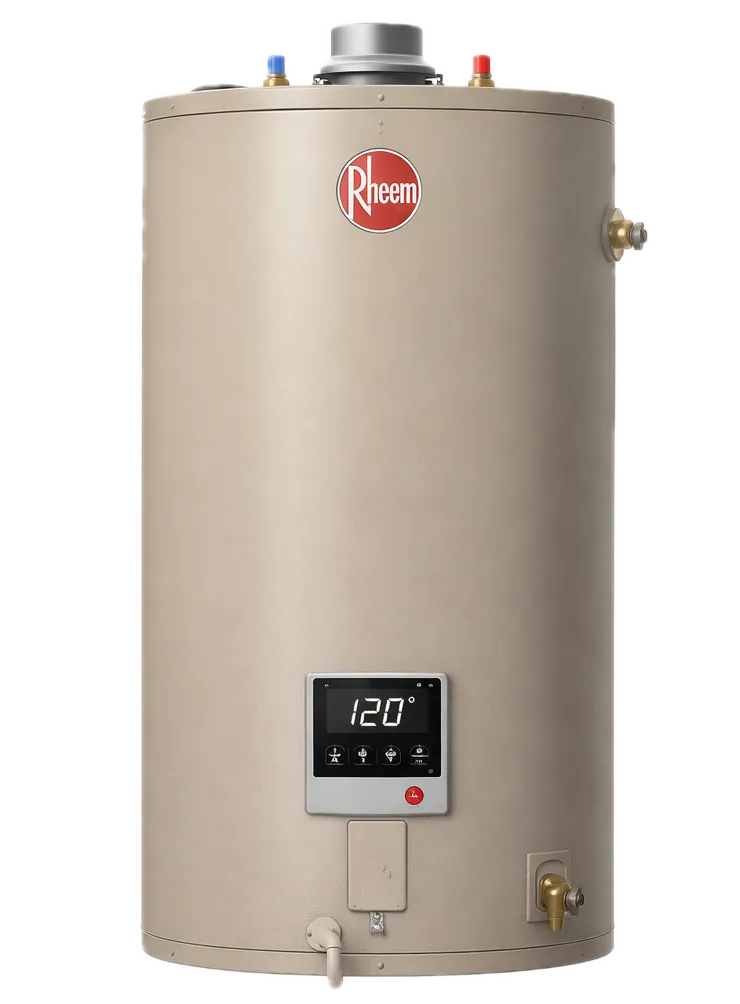
• Tank Water Heaters: Typically last 8 to 12 years. If your water heater is 9 years old (75%+ of its life) and needs a major repair, replacement is almost always the better financial move.
• Tankless Water Heaters: With a lifespan of 15 to 20 years, a 7-year-old tankless unit is still in its prime, making minor to moderate repairs highly cost-effective.
If you are noticing rusty water, slow recovery times, or strange noises from your hot water system, exploring your options for Water Heater Installation Replacement Silverdale WA or Water Heater Installation Replacement Poulsbo WA will help you make an age-appropriate decision.
Analyzing Service Records and Cascade Failures
Your system's service records are like a medical history—they reveal patterns that a single snapshot cannot. When evaluating an older system, look closely for:
1. Frequency Escalation: Are service calls becoming more frequent? A system that broke down once in five years is reliable; a system that has required three service calls in the last 24 months is in a "failure zone."
2. Recurring Parts: Are you replacing the same component repeatedly? This often points to an underlying systemic issue rather than an isolated part failure.
3. The Nickel-and-Dime Total: Many homeowners are shocked to realize they have already paid for 30% to 40% of a new unit just in emergency service calls and labor over the past few years.
In industrial maintenance, teams use Computerized Maintenance Management Systems (CMMS) to track Mean Time Between Failures (MTBF) and identify cascade failures—where the failure of one worn component puts extra stress on others, causing a chain reaction of breakdowns. The same thing happens in home heating. A failing blower motor can restrict airflow, causing the heat exchanger to overheat and crack, turning a moderate repair into a system-ending disaster.
Before you invest in another quick fix, it is wise to look at the big picture. If you are experiencing repeated issues, consulting with a professional about Furnace Installation Silverdale WA or Furnace Installation Poulsbo WA can help you break the cycle of endless repairs.
Calculating Total Cost of Ownership (TCO)
To make a truly defensible decision, we must look beyond the immediate repair invoice and calculate the Total Cost of Ownership (TCO). TCO represents the complete financial impact of owning and operating an asset over its remaining lifespan versus operating a new one.
$$text{TCO} = text{Initial Cost (Repair or Purchase)} + text{Ongoing Maintenance} + text{Energy Costs} + text{Downtime/Inconvenience}$$
When you compare these pathways over a 3-to-5-year horizon, the option with the lower initial price tag is not always the most economical.
Investing in modern, energy-efficient technology is one of the most effective ways to lower your home's long-term operational costs. If you are considering making the switch, our Heat Pump Installation Poulsbo WA Guide and Best Heat Pump Installation Guide Bremerton WA offer deep dives into how these systems perform in our specific Pacific Northwest climate.
Direct Costs vs. Long-Term Efficiency Gains
Older heating and cooling systems are incredibly resource-intensive. A furnace built fifteen years ago might have an AFUE (Annual Fuel Utilization Efficiency) rating of just 78%, meaning 22% of the fuel you pay for is wasted up the chimney. Modern high-efficiency condensing furnaces boast AFUE ratings up to 96% or higher.
Similarly, older air conditioners and heat pumps operate on outdated efficiency standards. Upgrading to a new high-efficiency system can reduce your monthly energy costs by 20% to 40%.
To make this transition more affordable, we always help our clients navigate available financial incentives:
• Local Utility Rebates: Homeowners can take advantage of Washington Energy Rebates for HVAC Upgrades and specific Puget Sound Energy Rebates for Homeowners to significantly lower the upfront cost of high-efficiency installations.
• Federal Incentives: You can also leverage Federal Tax Credits for Heat Pump and Geothermal Upgrades to maximize your return on investment.
Factoring in Salvage Value and Opportunity Costs
A complete economic analysis also considers what happens at the end of an asset's life.
• Salvage Value: Does the old equipment have residual value? While a broken residential furnace has negligible salvage value, some high-end appliances or commercial systems can be sold for parts or scrap metal. Conversely, some assets have negative salvage value if they require complex, paid disposal (such as refrigerant recovery or structural extraction).
• The Value-Added Model: A common mistake is assuming that spending money on a repair increases the market value of the asset. If you spend money to fix a transmission on an old vehicle, the market value of the vehicle rarely rises by the amount of the repair. The same is true for home systems; a repaired 15-year-old furnace adds no value to a home appraisal, whereas a brand-new, under-warranty system is a major selling point.
• Opportunity Costs: If you choose to spend money on a major repair, that capital is locked up in an aging asset. Could those funds be better utilized elsewhere, such as investing in a system that lowers your monthly utility obligations and frees up cash flow?
Non-Financial Factors: Safety, Compliance, and Technology
Sometimes, the math says "repair," but real-world conditions scream "replace." Non-financial factors—such as physical safety, regulatory shifts, and technological obsolescence—must always serve as overriding guardrails in your decision-making process.
No matter how much life is left in a system, safety should never be compromised. Whether we are inspecting a gas furnace or examining an older home's electrical panel, identifying potential hazards is our team's highest priority.
Safety Risks and Zero-Tolerance Hazards
We maintain a strict zero-tolerance policy for safety hazards. If a system poses an active risk to your family's health or your home's structural integrity, immediate replacement is often the only responsible path.
Key safety hazards that override economic calculations include:
• Carbon Monoxide Risks: Older gas furnaces can develop microscopic cracks in the heat exchanger. These cracks are often invisible to the naked eye but can leak deadly, odorless carbon monoxide into your home's breathing air.
• Combustion Issues: A yellow, flickering burner flame in a gas furnace (instead of a crisp, steady blue flame) indicates incomplete combustion, which is a primary source of carbon monoxide production.
• Electrical Fire Hazards: Degraded wiring, corroded connections, or obsolete electrical panels can become severe fire hazards under modern electrical loads.
Technological Obsolescence and Environmental Regulations
Environmental mandates and technological shifts can make repairing older systems practically impossible or legally restricted.
A prime example is the ongoing phase-out of R-22 refrigerant (commonly known as Freon). If you have an older air conditioner or heat pump that uses R-22, repairing a refrigerant leak is no longer economically viable. Because R-22 is no longer manufactured, a simple recharge can cost hundreds of dollars per pound. In these scenarios, upgrading to a modern system using eco-friendly refrigerants is the only sustainable choice.
Additionally, modern systems offer smart-home integration, variable-speed blowers, and advanced filtration that drastically improve indoor air quality. If you are ready to move away from outdated, expensive-to-run systems, looking into Mini Split Installation Replacement Silverdale WA or Mini Split Installation Replacement Poulsbo WA is an excellent way to bring your home comfort into the modern era.
Frequently Asked Questions about Home System Decisions
Making major decisions about your home's infrastructure can feel overwhelming. Here are some of the most common questions we hear from homeowners across the Olympic Peninsula:
Is the 50% rule still a valid benchmark for modern home systems?
While the 50% rule remains a solid starting point, it is often too simple for modern systems. Today's appliances and HVAC units are far more technologically advanced and energy-efficient than those built two decades ago. If an appliance has used more than 75% of its expected lifespan and requires a repair that approaches 30% to 40% of its replacement cost, the long-term energy savings and warranty protection of a new unit almost always make replacement the better financial choice.
How does the 30% rule apply to piping and ductwork?
This rule is highly specific to distribution systems like plumbing pipes and ventilation ductwork. When damage, corrosion, or leaks exceed 30% of the total system, attempting to patch the broken sections is rarely cost-effective. The labor and material costs required to meticulously blend new sections with old, degrading sections often approach or exceed the cost of a full, clean replacement. Plus, patching a failing system simply leaves the remaining 70% vulnerable to the next leak.
Why should I consider the age of an item even if it looks functional?
Appearance can be highly deceiving. A furnace or water heater might look pristine on the outside while experiencing severe internal degradation. For example, older furnaces can develop microscopic cracks in their steel heat exchangers due to years of thermal expansion and contraction, creating silent carbon monoxide hazards. Similarly, older electrical panels may have degraded internal busbars that no longer trip reliably under a short circuit, creating hidden fire hazards behind your drywall.
Conclusion
At the end of the day, deciding whether to repair or replace a critical home system does not have to be a stressful guessing game. By applying reliable financial benchmarks like the 50% Rule and the 5,000 Rule, assessing your equipment's true age, and factoring in modern energy efficiency, you can make a choice that protects both your family's comfort and your household budget.
At West Sound Comfort, we have spent over 30 years helping our neighbors throughout Kitsap, Pierce, Mason, Clallam, and Jefferson Counties navigate these exact decisions. We believe in building long-term relationships based on trust, which is why we maintain a 95% customer retention rate and back our work with an industry-leading 5-year warranty on parts and labor.
Whether you are in Bremerton, Poulsbo, Silverdale, Bainbridge Island, Port Orchard, Gig Harbor, or Sequim, we are here to provide honest, data-driven advice. Schedule a professional home system evaluation with us today, and let's make sure your home stays safe, efficient, and comfortable for years to come.
Trusted by Your Neighbors


Featured Manufacturer
Related Blogs
Gas Furnaces vs. Dual-Fuel Heat Pumps for Pacific Northwest Winters
The Danger of Ignoring Minor Gas Smells Near Your Furnace in Early Fall