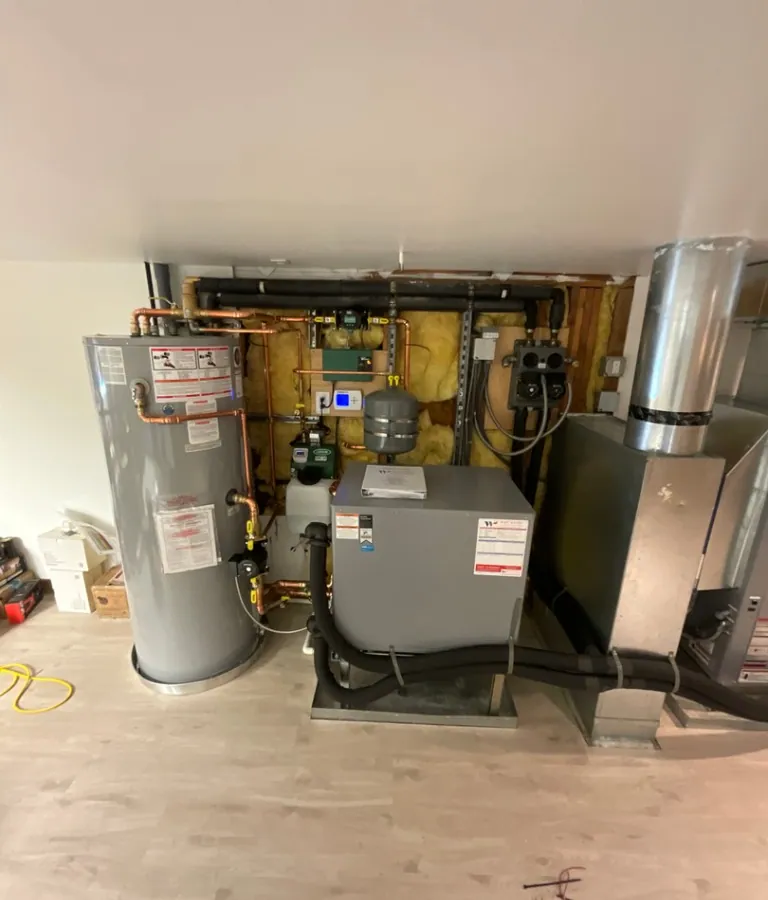
If you've ever wondered how often should you service your HVAC in wet climates, here's the direct answer:
| System Type | Recommended Service Frequency in Wet Climates |
|---|---|
| Heat pump | Twice per year (spring and fall) |
| Gas furnace | Once per year (fall) |
| Central AC | Once per year (spring) |
| Older systems (10+ years) | Twice per year minimum |
| Ductless mini-split | Twice per year |
Most national guidelines suggest annual HVAC service. But in the Pacific Northwest — where humidity regularly tops 75% from October through May and rain falls on 160+ days a year — that general advice simply isn't enough. The persistent moisture that makes places like Kitsap County and the Olympic Peninsula so beautifully green also quietly works against your heating and cooling equipment. It accelerates rust on metal components, promotes mold growth inside ductwork, clogs coils with organic debris like moss and pine needles, and forces your system to work significantly harder just to manage indoor temperature and moisture at the same time. A neglected system in this climate doesn't just run less efficiently — it wears out faster, breaks down more often, and can compromise the air your family breathes every day.
I'm Ernie Bogue, co-owner of West Sound Comfort Systems, and with more than three decades of hands-on experience servicing heating and cooling systems across Kitsap County and the surrounding region, I've seen what the wet marine climate does to HVAC equipment that doesn't get the attention it needs. In this guide, I'll walk you through exactly how often you should service your HVAC in wet climates like ours, what those service visits should include, and what you can do between visits to protect your system.

When living in a dry, arid environment, homeowners can often get away with scheduling a single, quick HVAC check-up once a year. In a damp marine environment like the Puget Sound, however, the rules are fundamentally different.
To keep your home comfortable and your utility bills manageable, professional servicing must be aligned with our unique seasonal shifts. For the majority of homes on the Olympic Peninsula, we recommend a twice-yearly professional maintenance schedule—specifically in the spring (to prepare for the humid summer cooling season) and in the fall (to ensure your heating source is ready for the long, damp winter).

To understand why our region requires a more proactive approach, let's look at how maintenance schedules compare between wet and dry geographic zones:
| Maintenance Factor | Wet/Marine Climate (e.g., Olympic Peninsula) | Dry/Arid Climate (e.g., Desert Southwest) |
|---|---|---|
| Overall Service Frequency | Twice per year (highly recommended for heat pumps) | Once per year |
| Primary Environmental Threat | Rust, corrosion, mold, moss, and pine needles | Dust, sand, and high heat |
| Filter Replacement Cycle | Every 30 to 60 days (due to moisture absorption) | Every 90 days |
| Condensate Drain Risk | High risk of algae, mold, and biological blockages | Low risk (mostly dry) |
| Outdoor Unit Threat | Wet leaves, falling pine needles, and moss trapping moisture | Blowing sand and dust accumulation |
| Average System Lifespan | 10–15 years if neglected; 20+ years if maintained | 10–12 years if neglected; 15–18 years if maintained |
How does this translate to your wallet? According to data from the Department of Energy, regular HVAC maintenance can save homeowners up to 30% on their monthly energy bills. Furthermore, a well-maintained system runs up to 15% more efficiently than a neglected one, and routine care can extend your system's overall lifespan from a disappointing 10–15 years to more than 20 years of reliable service.
If you are trying to determine the ideal schedule for your specific setup, reading our comprehensive guide on How Often Should You Service Your HVAC System will give you a clear baseline to start from.
The type of heating and cooling equipment installed in your home dictates how often our technicians need to inspect it. In Washington's marine climate, we see a wide variety of setups, but the two most common are year-round heat pumps (including mini-splits) and traditional gas furnaces.
Because our winters are relatively mild but damp, heat pumps are incredibly popular. To understand why they require more frequent attention, it helps to understand How Does a Heat Pump Work in the Pacific Northwest. Unlike a gas furnace, which sits dormant all summer, a heat pump works year-round. It extracts heat from the damp outdoor air during the winter to keep you warm, and then reverses the process in the summer to cool your home.
Because they never get a season off, heat pumps experience double the wear and tear of single-season systems. In our wet climate, a neglected heat pump has to work twice as hard to combat latent heat (humidity), which can lead to a 5% to 15% annual decline in energy efficiency. On the other hand, well-maintained heat pumps consume 20% to 25% less energy than neglected units. This is why we strongly advocate for twice-yearly servicing for heat pumps. You can read more about keeping your system running smoothly during the warm months in our guide to Summer Maintenance for Your Mini Split or Heat Pump.
Traditional gas furnaces, while only running during the colder months, still require an annual fall safety inspection. High indoor humidity during the wet season can cause moisture to settle on the metal heat exchanger inside a cold furnace. Over time, this moisture can cause rust, which may lead to micro-cracks that allow dangerous carbon monoxide leaks. A professional pre-winter tune-up ensures the combustion chamber is safe, clean, and venting properly before the first cold snap.
Many homeowners are surprised to learn that skipping their seasonal HVAC tune-up can actually void their manufacturer's warranty.
Major heating and cooling brands (such as Daikin, Carrier, Trane, and Mitsubishi) build highly sophisticated equipment designed to last. However, their multi-year parts warranties are almost always contingent upon proof of regular, professional maintenance. If a major component like a compressor or a heat exchanger fails prematurely in a damp environment, the manufacturer will often require service records before they will honor a warranty claim.
Without documented proof that a licensed professional has cleaned and inspected the system annually (or semi-annually for heat pumps), you could be left paying for a costly replacement out of pocket. Regular servicing acts as an insurance policy, protecting both your daily comfort and your long-term equipment investment.
To understand why wet climates are so brutal on HVAC systems, we have to look at the physics of damp air. High humidity levels—frequently exceeding 75% on the Olympic and Kitsap Peninsulas from autumn through spring—introduce a concept known as latent heat.
When air is saturated with moisture, it has a much higher specific heat capacity than dry air. This means your HVAC system has to work significantly harder to raise or lower the indoor temperature because it must first extract the heavy moisture from the air. This added thermal stress, combined with daily outdoor temperature swings of up to 30°F, subjects your system to constant expansion and contraction, accelerating wear on electrical and mechanical parts.
Finding the right system configuration is critical for managing this constant moisture. If you are exploring options for your home, you can read about the Best HVAC Setup for the Olympic and Kitsap Peninsula to see how local experts design systems specifically for this environment. Once your system is set up, you will also want to know the best 5 Energy Saving Moves for the First Cold Snap in the Pacific Northwest to keep your energy bills from spiking when the damp cold rolls in.
If you skip regular HVAC maintenance in a wet climate, you are inviting several quiet, destructive forces into your home:
A professional wet-climate HVAC service is not a simple visual inspection. It requires a technician to open up the system, take precise digital measurements, and perform deep physical cleaning.
When we perform a seasonal tune-up for homeowners in wet climates, our checklists are specifically tailored to combat moisture-related issues. A comprehensive service visit should always include:
To make sure your home is fully prepared for seasonal transitions, you can review our Spring HVAC and Plumbing Maintenance Checklist for a complete breakdown of what to look for.
While professional maintenance is important year-round, our priorities shift depending on the season.
In the spring, our focus is on preparing your system for the upcoming humid summer months. This transition requires cleaning away the organic debris, pine needles, and moss that accumulated over the wet winter, clearing the condensate lines to handle heavy summer dehumidification, and verifying refrigerant charges. To get your home ready for the warmer weather, check out our Spring HVAC Plumbing Maintenance Guide Northwest and read our practical Summer Cooling Tips for Marine Climate Homeowners.
In the fall, our focus shifts to heating reliability and indoor air quality. We inspect combustion blowers, test heating elements, check the defrost cycle on heat pumps (which is critical when outdoor temperatures hover near freezing in damp air), and verify that carbon monoxide detectors are functioning perfectly.
While complex electrical and refrigeration work must always be left to licensed professionals, there are several simple, highly effective tasks you can perform to protect your system between service visits.
Here is a straightforward monthly checklist for homeowners living in damp climates:
You shouldn't wait for your scheduled maintenance visit if your system is actively struggling. In a wet climate, small issues can escalate into expensive repairs very quickly. Contact a professional immediately if you notice any of the following warning signs:
If you are using a heat pump to keep cool during our increasingly warm summers, understanding How to Use Your Heat Pump for Summer Cooling can help you operate it efficiently and spot performance issues before they cause a complete breakdown.
This is one of the most common questions we get from local homeowners. When it is 45°F and raining, the outdoor air is completely saturated with moisture. As your heat pump extracts heat from this damp air, the moisture rapidly condenses and freezes onto the outdoor coils.
To clear this ice, the heat pump must periodically enter defrost mode. During defrost mode, the system temporarily reverses itself to send warm refrigerant back to the outdoor unit to melt the ice, while using backup heating strips to keep your home warm. This process is completely normal, but it does temporarily lower the system's overall operating efficiency.
In the Kitsap and Olympic Peninsula areas, we recommend checking your air filters every 30 days and replacing them at least every 60 days.
During the late summer, our region occasionally experiences wildfire smoke events. If smoke is present, your air filters will load up with fine particulate matter incredibly fast. During active smoke events, you should inspect your filters weekly and replace them immediately if they appear grey or ash-covered.
Yes, absolutely. Persistent outdoor humidity above 75% acts as a catalyst for rust and corrosion, especially on older systems or homes located near saltwater shorelines (such as Bainbridge Island, Port Townsend, or Sequim).
Rust can degrade the aluminum fins on your coils, corrode electrical terminals, and eat through the steel casings of your equipment. Regular professional maintenance includes applying protective coatings and clearing away the damp organic debris that accelerates this process.
Living in the beautiful, damp Pacific Northwest means accepting that our homes require a little extra care to stay comfortable and dry. Knowing how often should you service your HVAC in wet climates—and staying consistent with that schedule—is the single best way to protect your comfort, keep your energy bills low, and ensure your heating and cooling systems last for decades.
At West Sound Comfort, we have spent over 30 years helping our neighbors across Kitsap, Pierce, Mason, Clallam, and Jefferson Counties keep their homes comfortable through every rainy winter and warm summer. Our experienced technicians understand the unique challenges of our marine climate, and we back all of our parts and labor with an industry-leading 5-year warranty. It is this commitment to quality and honest service that has earned us a 95% customer retention rate.
If you want to learn more about why working with a local team makes a difference, read about the Benefits of Choosing a Multi-Trade Local Company. Ready to get your system ready for the seasons ahead? Schedule Your Professional HVAC Service Today with the team at West Sound Comfort.