.avif)

Why Your HVAC System's Constant Clicking Is More Than Just Annoying
If you're dealing with hvac short cycling in gig harbor, wa, you're hearing your system turn on and off every few minutes. This happens when your furnace, air conditioner, or heat pump runs for less than 10 minutes before shutting down, only to restart moments later. It's not just annoying; it's a sign your system is struggling, wasting energy, and heading toward an expensive breakdown.
Quick diagnosis checklist:
- Your system runs for 5 minutes or less before shutting off
- You hear frequent clicking or startup sounds throughout the day
- Your energy bills have spiked without explanation
- Some rooms are too hot while others are too cold
- The system never quite reaches your thermostat setting
Short cycling can spike your utility bills and puts massive strain on your compressor and fan motor—the most expensive parts to replace. In Gig Harbor's mild, damp climate, where systems often switch between heating and cooling, short cycling is common. The constant on-off cycling prevents your home from reaching a comfortable temperature and leaves the air feeling stuffy or humid.
Whether you need urgent HVAC repair or want to schedule a tune-up to catch problems early, understanding short cycling helps you know when to call for help. Many causes have simple fixes, like changing a clogged air filter, while others—like refrigerant leaks or an oversized system—need professional attention.
What is HVAC Short Cycling and Why Is It a Problem?
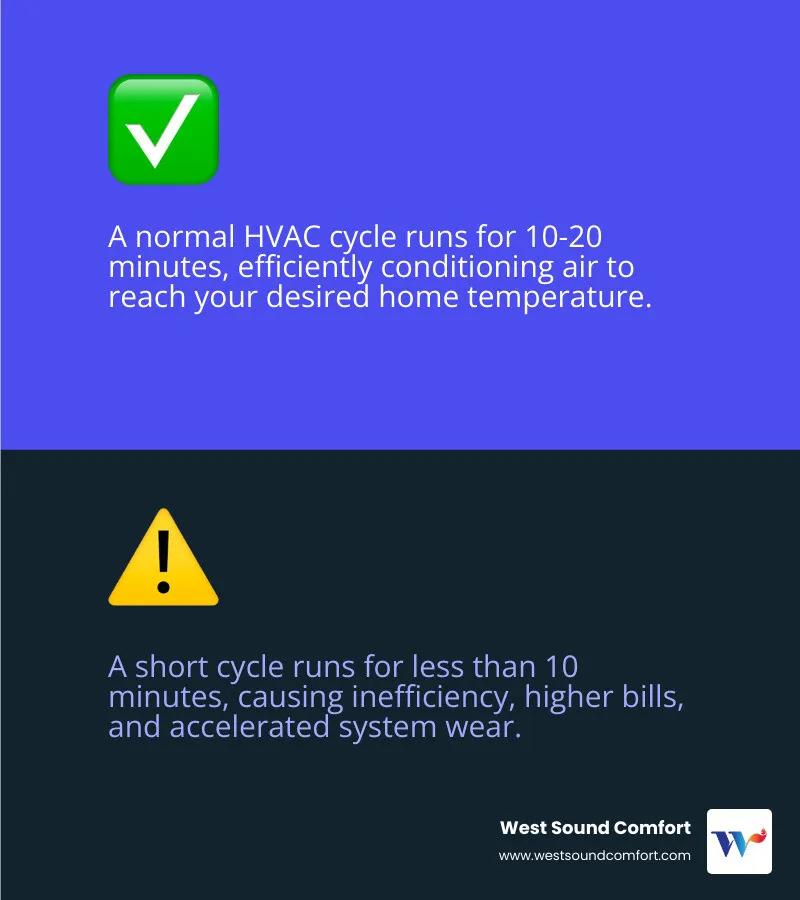
Short cycling is when your HVAC system turns on and off too frequently, failing to complete a full heating or cooling cycle. A healthy system typically runs for 10 to 20 minutes at a time to efficiently condition your Gig Harbor home. When short cycling, these run times can shrink to just a few minutes.
This stop-and-start pattern is a serious problem for three key reasons:
- It's Inefficient: Each time your system starts, it draws a large surge of power. Constant restarting uses far more energy than steady operation, leading to higher utility bills.
- It Reduces Comfort: A short-cycling system can't run long enough to evenly distribute conditioned air or properly dehumidify your home. This results in hot and cold spots and a stuffy, clammy feeling, especially during damp Gig Harbor summers.
- It Causes Excessive Wear and Tear: The strain of frequent startups accelerates wear on critical components, particularly the compressor and fan motor. This can dramatically shorten your system's lifespan, leading to premature failure and the need for major repairs or a full system replacement much sooner than expected.
Ignoring short cycling means paying more for less comfort while actively damaging your HVAC investment. Addressing it promptly protects your system and restores a comfortable living environment.
How to Tell if Your Gig Harbor HVAC System is Short Cycling
Spotting hvac short cycling in gig harbor, wa is straightforward once you know the signs. Your system is sending clear signals that something is wrong.
The most obvious clue is the sound. Instead of a long, steady run, you'll hear frequent on/off sounds as the system kicks on, runs briefly, and clicks off again. If you time the cycles and find they are consistently under 10 minutes, that's a clear red flag.
Your energy bill is another informant. Sudden energy bill spikes without a clear reason often point to short cycling, as the constant startups consume excess power. You'll also notice temperature troubles, like the system never reaching the set temperature on your thermostat or creating uneven temperatures throughout the house.
Finally, pay attention to the overall feel of your home. If it feels stuffy and humid in the summer or perpetually chilly in the winter despite the system running, short cycling is a likely culprit. The system isn't running long enough to manage humidity or distribute air effectively.
Here are the top 5 signs your HVAC system is short cycling:
- Frequent clicking and startup sounds throughout the day
- Run times consistently under 10 minutes before shutting off
- Unexplained spikes in your utility bills despite normal usage
- Thermostat temperature never quite reached or maintained
- Uneven temperatures and persistent stuffiness in your home
If you notice these signs, it's time to investigate. The sooner you address short cycling, the less damage it does to your system and your wallet.
Common Causes of HVAC Short Cycling in Gig Harbor, WA
When your HVAC system in Gig Harbor starts short cycling, it's pointing toward an underlying issue. Many causes are identifiable, ranging from simple fixes to more complex problems requiring a professional.
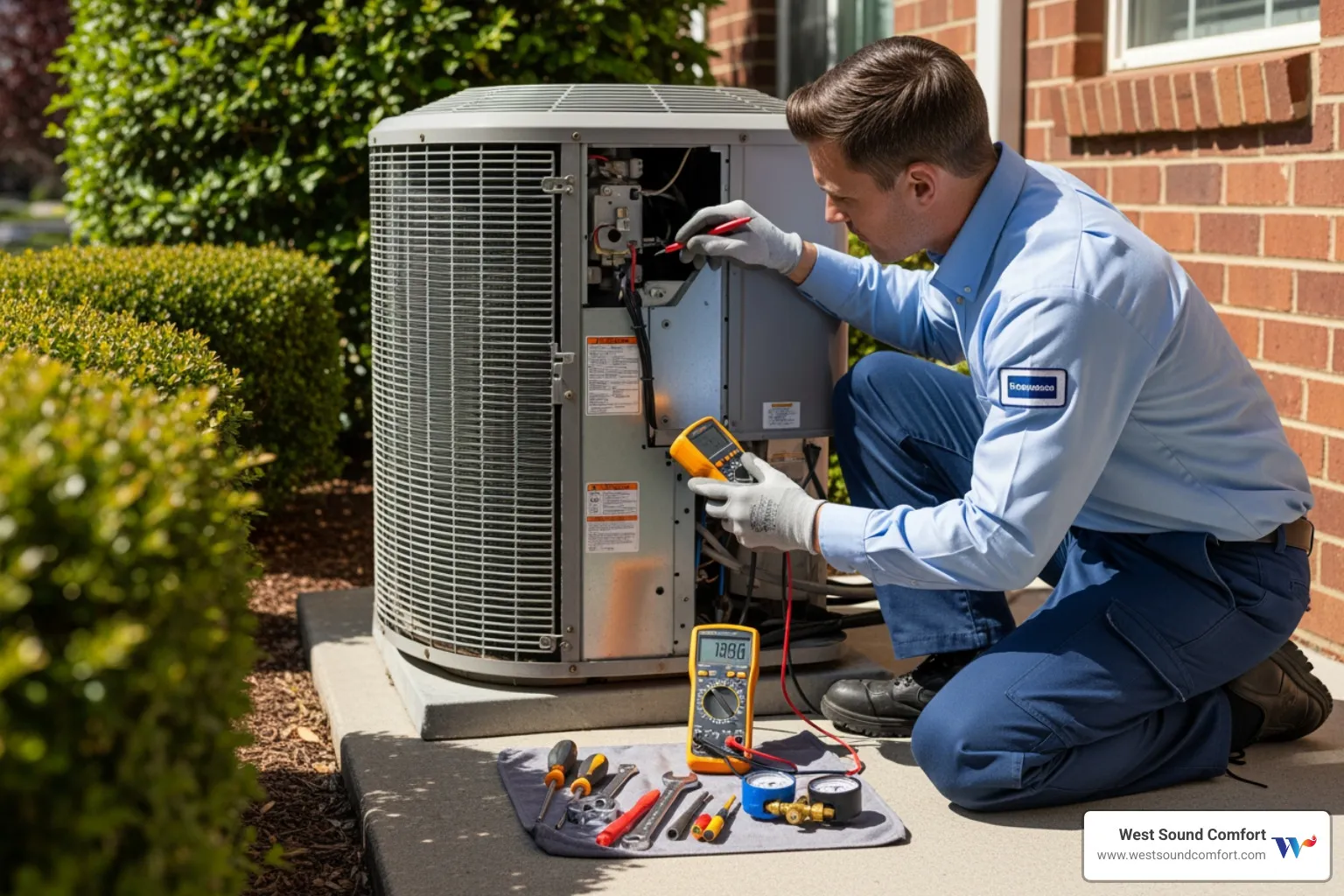
Common culprits for hvac short cycling in gig harbor, wa include restricted airflow, thermostat issues, an improperly sized system, refrigerant leaks, or electrical faults. Gig Harbor's damp, mild climate can exacerbate these problems, making prompt diagnosis even more important.
Simple Fixes: Airflow and Thermostat Problems
Before calling a professional, check for these common issues, as you may be able to solve the problem in minutes.
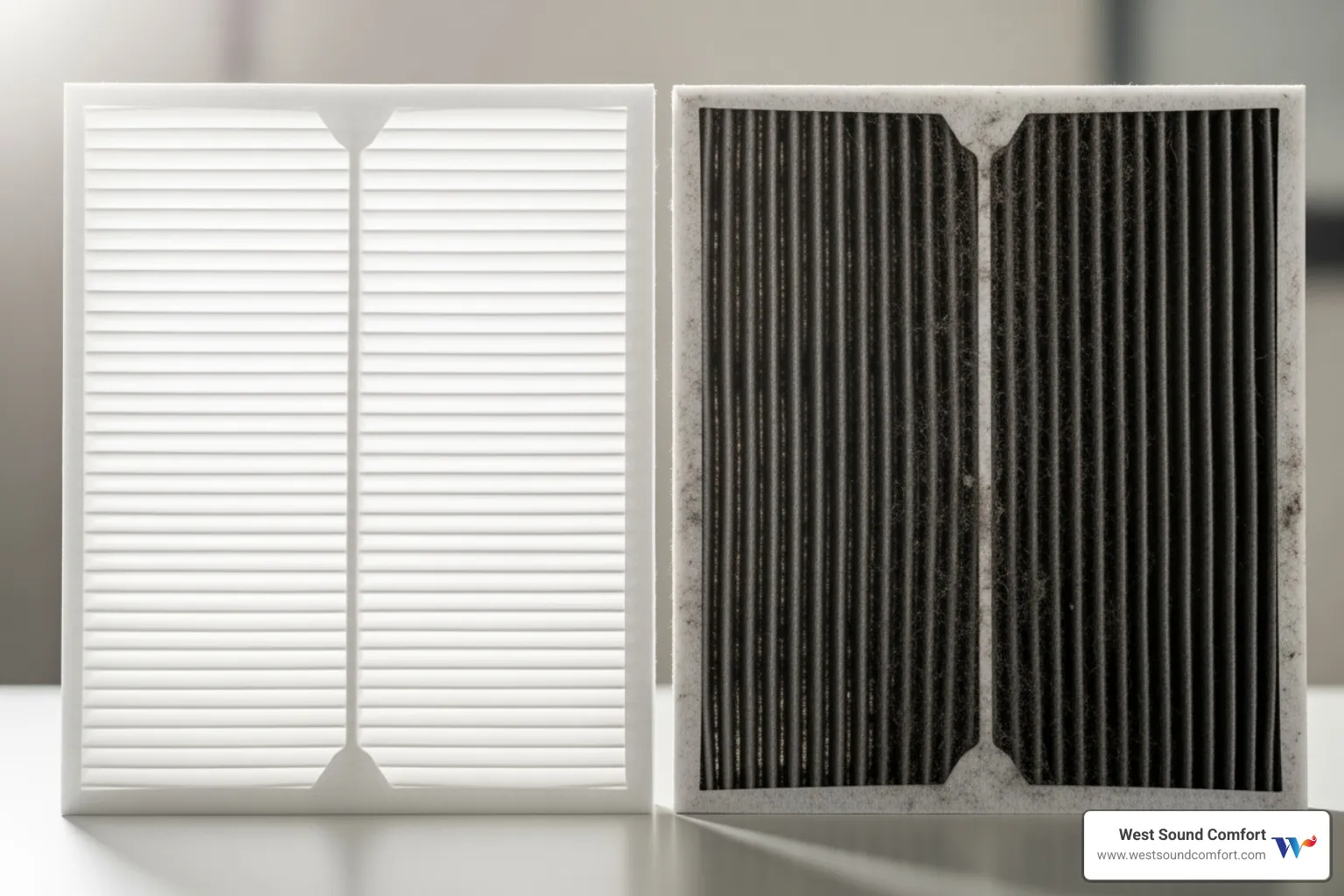
- Clogged Air Filter: This is a primary cause of short cycling. A dirty filter restricts airflow, causing your furnace to overheat or AC coils to freeze, triggering a safety shutdown. Check your filter monthly and replace it every 1-3 months.
- Blocked Vents: Walk through your home and ensure all supply and return vents are open and unobstructed by furniture, rugs, or curtains.
- Obstructed Outdoor Unit: Your outdoor condenser needs clear space to function. Clear away any leaves, shrubs, or debris within a two-foot radius of the unit.
- Thermostat Placement: If your thermostat is in direct sunlight or near a heat source, it will get false readings and shut the system off prematurely. Ensure it's on an interior wall in a central location.
How Gig Harbor's Climate Affects Your System
Gig Harbor's unique weather patterns challenge HVAC systems. During the spring and fall shoulder seasons, rapid temperature swings force systems to switch between heating and cooling, increasing stress. The region's high humidity also makes your AC work harder to remove moisture. If the system short cycles, it won't run long enough to dehumidify the air, leaving your home feeling clammy. For homes near the Puget Sound, salt air can corrode outdoor unit components, leading to refrigerant leaks and other failures that cause short cycling.
Complex Issues: Sizing, Refrigerant, and Electrical Faults
If simple fixes don't work, the problem likely requires a trained technician.
- Oversized HVAC Unit: A system that's too powerful for your home will heat or cool the space too quickly, satisfying the thermostat before completing a proper cycle. This prevents dehumidification and causes constant on-off cycling.
- Low Refrigerant: Refrigerant doesn't get used up; if it's low, you have a leak. A leak prevents the system from transferring heat effectively, causing it to struggle and cycle improperly. According to the US Department of Energy, this is a common issue requiring professional repair.
- Electrical Problems: Failing capacitors, faulty control boards, or damaged wiring can send erratic signals or prevent motors from starting correctly, leading to intermittent shutdowns.
These complex issues require specialized tools and expertise to diagnose and repair safely.
CauseAir ConditionersFurnacesHeat PumpsOversized UnitVery common; cools too quicklyHeats too quickly, then shuts offHeats/cools too quickly in mild weatherDirty Air FilterRestricts airflow, causes freezingRestricts airflow, causes overheatingRestricts airflow, causes freezing/overheatingThermostat IssuesFaulty sensor, poor placementFaulty sensor, poor placementFaulty sensor, poor placement, mode switching issuesLow RefrigerantStruggling to cool, freezing coilsN/A (not applicable)Struggling to heat/cool, freezing coilsElectrical IssuesCapacitor, control board, wiringIgnition system, fan motor, control boardCompressor, capacitor, control board, reversing valveAirflow ObstructionsBlocked vents, dirty coilsBlocked vents, dirty blowerBlocked vents, dirty coils, outdoor unit obstructionFailing ComponentsCompressor, fan motorBlower motor, heat exchanger (safety shutdown)Compressor, fan motor, reversing valve
Your Action Plan: Fixing and Preventing Short Cycling
When you're dealing with hvac short cycling in gig harbor, wa, a clear action plan can help you restore comfort and protect your system. Here’s a guide to what you can do, what professionals can prevent, and when to call for help.
DIY Troubleshooting Steps for Homeowners
Before making a service call, perform these simple checks, as they address the most common causes of short cycling.
- Check and Replace Your Air Filter: A clogged filter is the number one culprit. If you can't see light through it, replace it.
- Verify Thermostat Settings: Ensure it's on the correct mode (heat/cool) and that its location isn't causing false temperature readings (e.g., in direct sunlight).
- Clear Debris from Your Outdoor Unit: Your condenser needs at least two feet of clear space on all sides to breathe. Remove any leaves, branches, or other obstructions.
- Ensure All Vents Are Open and Unblocked: Check that furniture, rugs, or curtains aren't covering any supply or return air vents in your home.
If these steps don't resolve the issue, it's time to call a professional.
The Role of Professional Maintenance in Preventing HVAC Short Cycling in Gig Harbor, WA
Regular professional maintenance is the best way to prevent short cycling. An annual tune-up allows a technician to catch and fix minor issues before they escalate. During a maintenance visit, a technician will:
- Clean indoor and outdoor coils to ensure efficient heat transfer.
- Check refrigerant levels and inspect for leaks to prevent compressor strain.
- Inspect electrical connections and lubricate moving parts to reduce wear.
- Calibrate the thermostat for accurate temperature readings.
According to the US Department of Energy, regular maintenance is key to system efficiency and longevity. Our comprehensive HVAC services are designed to keep your system running smoothly in the demanding Gig Harbor climate.
When to Call a Professional for HVAC Short Cycling in Gig Harbor, WA
Some problems require professional expertise. Call a technician if:
- DIY troubleshooting doesn't work. If you've checked the filter, vents, and thermostat and the problem persists, it's time for a professional diagnosis.
- You suspect a refrigerant leak. Hissing sounds or ice on your coils are telltale signs that require immediate professional service.
- You notice burning smells or loud noises. Grinding, screeching, or banging sounds signal serious mechanical issues that should be addressed immediately.
- Your system won't turn on at all. If a period of short cycling is followed by a complete shutdown, a critical component has likely failed.
If your HVAC is broken in Gig Harbor, WA, or if short cycling has you concerned, a professional assessment can prevent a minor issue from becoming a major emergency. You can easily book now to schedule a service appointment.
Frequently Asked Questions about HVAC Short Cycling
Dealing with hvac short cycling in gig harbor, wa can be confusing. Here are answers to some of the most common questions we hear from homeowners.
Can a dirty filter really cause short cycling?
Yes, absolutely. A clogged air filter is one of the most common causes. It restricts airflow, forcing your system to struggle. This can cause the furnace to overheat or the air conditioner coils to freeze. In either case, a safety switch will shut the system down to prevent damage, resulting in a short cycle. Regularly replacing your filter is the easiest way to prevent this.
Is short cycling an emergency?
It's not typically a middle-of-the-night emergency, but it is a serious problem that requires prompt attention. Short cycling is your HVAC system's warning sign that something is wrong. Ignoring it leads to higher energy bills, reduced comfort, and excessive strain on expensive components like the compressor. The longer you wait, the more damage can occur. It's best to schedule a service appointment soon to diagnose and fix the root cause.
How does an oversized AC unit cause short cycling?
It seems counterintuitive, but an HVAC system that is too large for your home is a major cause of short cycling. The oversized unit cools the air so quickly that it satisfies the thermostat's temperature setting in just a few minutes. However, it shuts off before it has had the chance to run long enough to remove humidity from the air. This leaves your home feeling cold but clammy. The system then quickly cycles back on, wasting energy and causing unnecessary wear and tear without ever achieving true comfort. Proper system sizing is critical for efficient operation, as noted by resources like the US Department of Energy.
Get Expert Help for Your Gig Harbor HVAC System
We've covered the causes and signs of hvac short cycling in gig harbor, wa, from simple filter issues to complex mechanical failures. Short cycling is more than an annoyance—it's a red flag from your system that a small problem could become a major one.
While some issues can be resolved with DIY checks, many causes like refrigerant leaks, electrical faults, or an improperly sized system require professional expertise. Attempting to fix these without the right tools and training can be unsafe and lead to further damage.
That's where we come in. At West Sound Comfort, we have over 30 years of experience serving homeowners across Kitsap, Pierce, Mason, Clallam, and Jefferson Counties. We understand the unique challenges our local climate poses for HVAC systems, from salt air corrosion to the strain of rapid temperature swings.
When you call us, you get a thorough diagnosis to find the root cause of the problem. We stand behind our work with a 5-year warranty on parts and labor, so you can trust the repair will last. Our 95% customer retention rate reflects our commitment to doing the job right the first time.
Don't wait for a complete breakdown. If your system is short cycling, your energy bills are climbing, or your home just isn't comfortable, it's time to act.
Ready to restore your peace of mind? Contact us in the Gig Harbor Area today. We're here to help you get back to enjoying your home.
Trusted by Your Neighbors


Featured Manufacturer
Related Blogs

Repairing an R-22 AC Unit vs. Upgrading to a Modern Heat Pump This Summer

What Should My Thermostat Be Set To When I Leave for Summer Vacation?