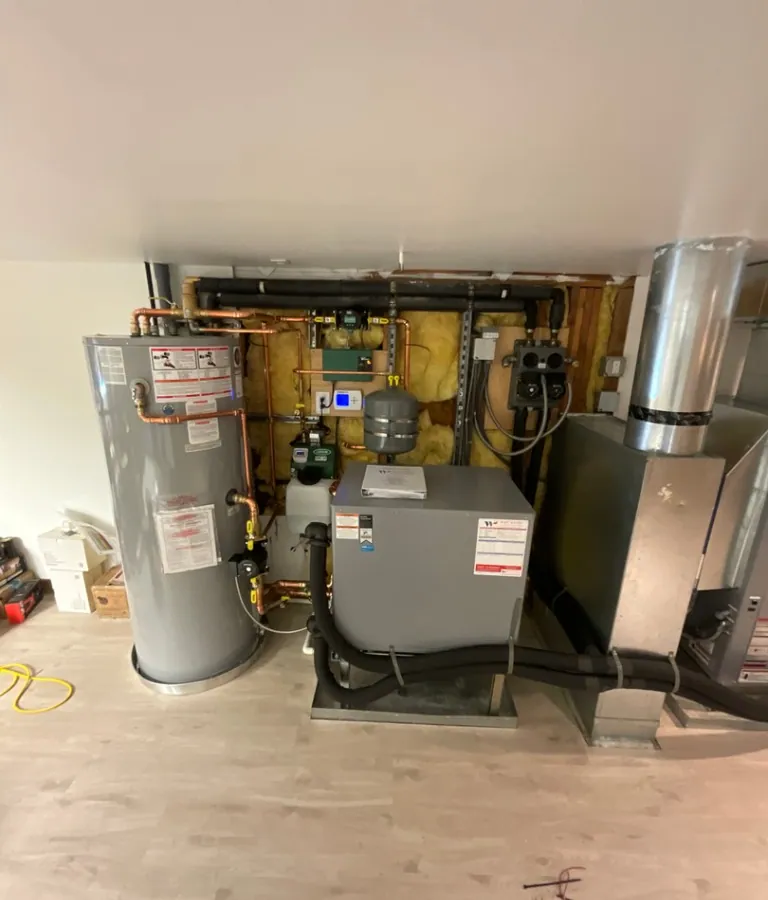
Understanding heat pump vs mini split what is the difference comes down to one core distinction: a mini-split is actually a type of heat pump — the key difference is whether the system uses ductwork to distribute air or delivers it directly to a room without ducts.
Here's a quick breakdown:
| Feature | Central (Ducted) Heat Pump | Mini-Split (Ductless) Heat Pump |
|---|---|---|
| Uses ductwork? | Yes | No |
| Best for | Whole-home comfort with existing ducts | Zoned comfort, additions, homes without ducts |
| Air delivery | Through vents via duct system | Directly from wall-mounted indoor unit |
| Efficiency loss | Up to 30% from duct leaks | Near zero duct loss |
| Zoning | Possible, but requires extra equipment | Built-in, room by room |
| Installation | Requires ducts (existing or new) | 3-inch wall hole and refrigerant line |
| Heating + Cooling? | Yes | Usually yes, but some models cool only |
Both systems move heat rather than generate it — making them far more efficient than electric furnaces or baseboard heaters. The right choice for your home depends on your layout, existing ductwork, and how you want to control comfort room by room.
I'm Ernie Bogue, co-owner of West Sound Comfort Systems, and with more than three decades in the trades — including extensive work with heat pump and ductless systems across the Olympic Peninsula — I've helped countless homeowners navigate exactly this heat pump vs mini split what is the difference question. In the sections ahead, I'll walk you through everything you need to know to make the right call for your home.

When we talk about heat pump vs mini split what is the difference, we are often comparing a centralized system to a decentralized one. Both rely on the same fundamental air-source technology: they use an outdoor compressor/condenser unit and an indoor air handler connected by refrigerant lines. Instead of creating heat by burning fuel or using high-resistance electric coils, they use a reversing valve to "pump" heat from one place to another.
In the summer, they pull heat out of your house and dump it outside. In the winter, they reverse that process, extracting heat from the outdoor air (even when it feels cold to us!) and moving it indoors. This process is incredibly efficient, often reducing electricity use for heating by approximately 50% compared to electric furnaces.
For many of our neighbors needing Heat Pump Installation Replacement Poulsbo WA, the choice comes down to how that air is distributed. A "traditional" heat pump is usually a central unit that connects to a network of metal or plastic ducts hidden in your crawlspace or attic. A mini-split, on the other hand, is a ductless system. It skips the "middleman" of ductwork and delivers the air directly into the room through one or more compact indoor units.
This is a common point of confusion. While nearly all the units we install in the Pacific Northwest are heat pumps (providing both heating and cooling), not every mini-split is a heat pump. There are cooling-only mini-splits available, which function much like a high-tech window AC but without the noise and security risks.
However, in our May 2026 climate, where we need reliable warmth through the damp winters of the Olympic Peninsula, we almost always recommend the heat pump version. These models provide year-round climate control and are the standard for modern energy efficiency.
Traditional ducted heat pumps are designed for whole-home comfort. They are often the best choice if your home already has a healthy, well-sized duct system in place. These systems can often be integrated with an existing furnace to create a "dual-fuel" or hybrid system. This setup uses the electric heat pump for the majority of the year and switches to the furnace only when temperatures drop significantly, ensuring your home stays cozy regardless of the weather outside.
Efficiency is where the heat pump vs mini split what is the difference debate gets interesting. In the HVAC world, we measure efficiency using SEER2 (Seasonal Energy Efficiency Ratio) for cooling and HSPF2 (Heating Seasonal Performance Factor) for heating.
| Metric | Central Ducted Heat Pump | Ductless Mini-Split |
|---|---|---|
| SEER2 Range | 15.2 to 25 | 15.2 to 35 |
| HSPF2 Range | 7.5 to 10+ | 9 to 12+ |
| COP (Coefficient of Performance) | 2.0 to 4.0 | 3.0 to 4.5 |
As of 2026, efficiency standards have pushed technology further than ever. Modern inverter technology allows both systems to modulate their speed, much like a dimmer switch for a light, rather than just clicking "on" or "off." This prevents the energy spikes associated with older equipment and maintains a much more consistent temperature.
The biggest advantage for the mini-split is the absence of ducts. The Department of Energy reports that duct losses can account for more than 30% of energy consumption in central forced-air systems. When air travels through ducts in an unconditioned attic or crawlspace, it loses heat in the winter and gains heat in the summer through leaks and poor insulation.
Because mini-splits deliver air directly, they eliminate this 30% waste. This is why you’ll see mini-splits achieving SEER2 ratings as high as 35, compared to the 25 max typically seen in central units. If you are looking for Ductless Mini Split Installation Silverdale WA, you are choosing the most efficient way to condition your air.
Homeowners in Kitsap and Mason Counties often ask if these systems can handle our winters. The answer is a resounding yes. Modern "cold-climate" heat pumps can maintain their heating capacity even when temperatures drop to -15°F.
While some systems use electric backup "heat strips" for extreme cold, many of the high-end mini-splits we install are so efficient that they don't require a traditional backup source for our region's typical weather. However, for ducted systems, pairing the heat pump with a gas or propane furnace remains a popular and reliable "dual-fuel" strategy for total peace of mind.
Installing a new system shouldn't feel like a major construction project. This is another area where the heat pump vs mini split what is the difference comes into play.
A central heat pump installation is relatively straightforward if the ductwork is already there. But if you have an older home with baseboard heat or a home where the ducts are undersized or falling apart, a mini-split is often the smarter path.
A mini-split installation is remarkably non-invasive. We only need to drill a small, 3-inch hole in the exterior wall to run the "line set" (the copper tubes and wiring) between the outdoor compressor and the indoor air handler. This allows for a space-saving design that doesn't require tearing into your ceilings or walls. For those considering Mini Split Installation Replacement Silverdale WA, this ease of installation is a major benefit.
If you are adding a garage workshop, a "mother-in-law" suite, or finishing a basement, extending your existing ductwork can be a nightmare—and it often puts too much strain on your current HVAC unit.
Mini-splits are the perfect solution for these scenarios. They provide independent climate control without the need to mess with your main home system. We also see many historic homes in Port Townsend or Sequim that simply don't have the space for bulky ducts; in these cases, a ductless retrofit preserves the architectural integrity of the home while providing modern comfort. If a unit ever has an issue, Mini Split Repair Silverdale WA is a standard service that keeps these targeted systems running smoothly.
One of the most loved features of the mini-split is "zoning." A single outdoor unit can often support up to eight indoor air handlers. This means the master bedroom can be a cool 68 degrees for sleeping while the living room stays a toasty 72.
In a traditional ducted system, you usually have one thermostat controlling the whole house. While you can add "zone dampers" to ducted systems, they are often complex and less effective than the native zoning built into a multi-head mini-split system.
Beyond just the temperature, we have to think about the air you breathe and the "vibe" of your home.
Noise Levels: Mini-split indoor units are whisper-quiet, often operating between 19 and 30 decibels. For context, a quiet library is about 40 decibels. Central systems are also much quieter than they used to be, but you will still hear the rush of air through the vents when the fan kicks on.
Air Quality: Ductless systems are excellent for allergen reduction. Traditional ducts can collect dust, pet dander, and even mold over decades. Because mini-splits don't use ducts, there’s no place for those allergens to hide. Most units feature advanced multi-stage filtration that is easy for homeowners to access and clean.
Both systems generally last between 15 and 20 years, provided they receive proper care. Maintenance is slightly different for each:
For a deeper dive into keeping your system in top shape, check out our Ductless Mini Split Maintenance Service in Poulsbo WA guide or our tips on Summer Maintenance for Your Mini Split or Heat Pump.
This is often the "make or break" point for homeowners.
The mini-split wins here. Retrofitting a 1920s craftsman with ductwork is invasive, expensive, and often requires lowering ceilings or losing closet space. Ductless systems provide a "no-demo" solution that protects your home's historic character. If an older system fails, we provide Mini Split Repair Silverdale WA to keep that specialized equipment running.
You don't need one, but it can be beneficial. In very cold climates, a "dual-fuel" setup provides a safety net. If you live in a particularly cold pocket of the Olympic Peninsula, having that furnace backup ensures you stay warm even during a record-breaking freeze. If your existing heat pump struggles in the cold, you might need a Heat Pump Repair Poulsbo WA to check the defrost cycle or backup heat strips.
Indoor mini-split units are incredibly quiet (19-30 dB). Outdoor units for both types are also much quieter than old-school air conditioners, though we always recommend thoughtful placement away from bedroom windows or your neighbor’s patio to ensure everyone stays happy.
Choosing between a central heat pump and a mini-split doesn't have to be a headache. Whether you want the invisible, whole-home comfort of a ducted system or the high-efficiency, zoned control of a mini-split, the goal is the same: a comfortable, energy-efficient home.
At West Sound Comfort, we bring over 30 years of experience to every job across Kitsap, Pierce, and Mason Counties. We are proud of our 95% customer retention rate and stand behind our work with a 5-year warranty on parts and labor. We live and work in this community, from Bremerton to Sequim, and we understand the unique climate challenges of the Olympic Peninsula.
I'm looking to upgrade my home's heating. Who in the Olympic Peninsula specializes in energy-efficient systems? Reach out to us today, and let's find the perfect comfort solution for your home.