
Signs Your Boiler Is Failing
The warning signs of a failing boiler: uneven heat, banging or kettling, leaks, low pressure, ignition trouble, short cycling, soot and rust.
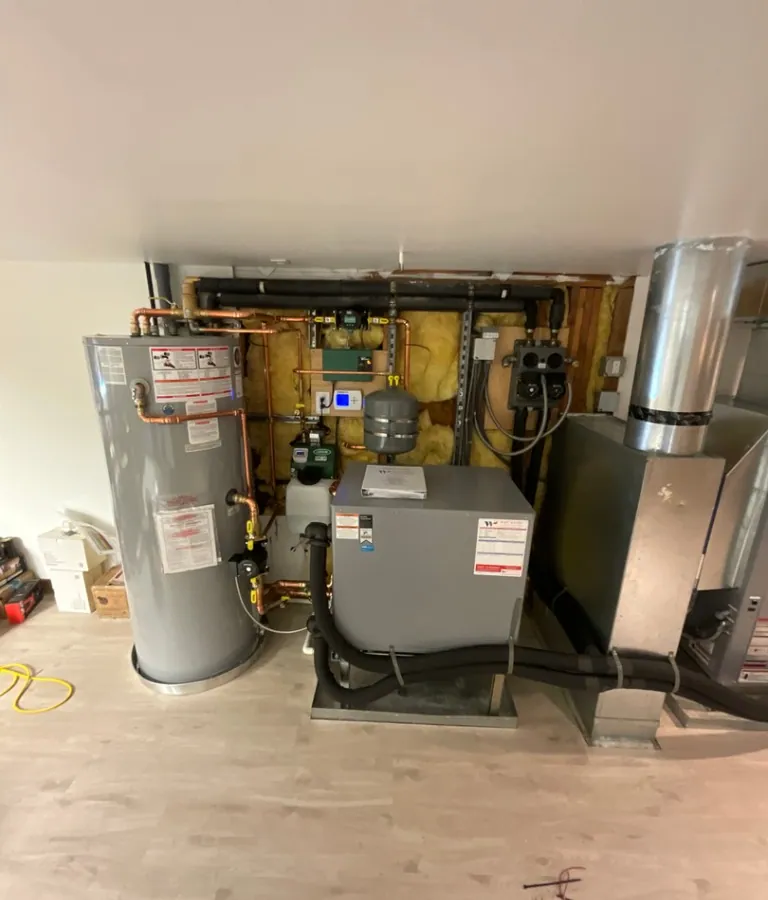
Quick answer: Common signs a boiler is failing include rooms that won't heat, banging or kettling noises, leaks or low pressure, a burner that won't stay lit, short cycling, soot or rust, and heating bills that climb for no clear reason.
Uneven Heat or No Heat
Rooms that stay cool while others heat normally are often the first sign a boiler or its system is struggling.
Uneven heat usually points to circulation. Air trapped in the pipes, a weak circulator pump or a zone valve stuck closed can keep hot water from reaching part of the house. If the whole house is cold, the cause may be the boiler itself, its controls or the thermostat. Radiators that are warm at the bottom and cool at the top are a classic sign of trapped air, while a single cold zone often traces back to its valve or thermostat.
Banging, Gurgling or Kettling Noises
A healthy boiler runs with little more than a low hum, so new noises deserve attention.
Kettling, a rumbling sound like a kettle about to boil, usually means scale or sediment has built up on the heat exchanger and water is boiling in pockets. Gurgling points to trapped air. Banging can come from pipes expanding as they heat, or from air and flow problems in the system. Whistling or hissing can signal a pressure problem. Noise alone doesn't always mean failure, but it often shows the boiler is working harder than it should.
Leaks and Pressure Problems
Water near the boiler, or a pressure gauge that keeps dropping, means water is leaving the system somewhere.
A small drip from a fitting may be a simple repair. Water from the boiler body can mean a leaking heat exchanger, which is far more serious. A pressure relief valve that keeps releasing water often points to pressure climbing too high, which can come from a failed expansion tank. If you keep adding water to hold pressure, the leak is still there, and fresh water brings in oxygen and minerals that speed up corrosion inside the system.
Ignition and Pilot Problems
A burner that takes several tries to light, or a pilot that keeps going out, is an early warning worth acting on.
On gas boilers, ignition trouble often comes from a dirty flame sensor, a weak igniter or a failing gas valve. On oil boilers, a clogged nozzle, a dirty filter or a fuel supply problem can keep the burner from firing. Left alone, these problems tend to end in a boiler that won't start at all, often when the heat is needed most.
Short Cycling
A boiler that turns on and off in short bursts is wasting fuel and wearing out its parts.
Short cycling can come from a boiler that's too large for the home, a faulty thermostat or control, low water flow or an overheating safety limit. Each start puts wear on the igniter, burner and controls, and rooms may swing between warm and cool. If you notice the boiler firing up and shutting down every few minutes, it's worth having the cause found.
Soot, Rust and Corrosion
Visible soot, rust or corrosion on or around the boiler is a sign the inside may be in worse shape.
Soot around the burner door or vent points to incomplete combustion, which wastes fuel and can be a safety concern. Rust on the boiler jacket, fittings or the floor beneath it often means a slow leak somewhere. Green or white crust on copper fittings is another sign of leaking water.
Rising Heating Bills
A boiler that's losing efficiency often shows up first on your heating bill, before any other symptom is obvious.
If your bills climb while your habits and the weather stay the same, the boiler may be fighting scale on the heat exchanger, a dirty burner or controls that no longer run it efficiently. Yearly boiler maintenance is the usual way to catch these problems while they're still small.
Hot Water Problems
If your boiler also heats your household water, hot water trouble can be an early sign of a boiler problem.
With a combination boiler, hot water that runs lukewarm, swings in temperature or takes longer to arrive can point to scale on the hot water side, a failing sensor or a boiler that's struggling overall. With an indirect water heater fed by the boiler, slow recovery after showers can mean the boiler isn't delivering enough heat to the tank. Hard water speeds up scale on the hot water side, so these problems can appear gradually.
Age and Repair History
A boiler's age and the repairs it has needed recently tell you how to read the other signs.
One warning sign on a boiler with a clean repair history is usually a simple fix. The same sign on a boiler that has needed several repairs in a short time, or that's near the end of its expected life, carries more weight. Keeping a record of service visits makes these patterns easier to spot.
Warning Signs That Need Action Now
Some signs mean the boiler should be shut down and the home made safe before anything else.
If your carbon monoxide alarm sounds, you smell gas, you see smoke or the smell of fuel oil is strong, leave the house and call your gas utility or emergency services from outside. For a faint fuel oil smell, turn the boiler off at its emergency switch, ventilate the area and call for service. Scorch marks, melted wiring or water pooling near electrical controls also call for a technician before the boiler runs again.
Simple Checks Before You Call
A few safe checks can rule out simple causes and help a technician diagnose the problem.
Make sure the thermostat is set to heat and turned above room temperature. Check that the boiler's power switch is on and the breaker hasn't tripped. Look at the pressure gauge and note the reading. On an oil boiler, confirm the tank isn't empty. Leave burners, controls, venting and anything electrical to a qualified technician.
Repair or Replace?
One warning sign usually calls for a repair, while several at once may mean the boiler is near the end of its life.
Our guide to boiler repair vs. replacement walks through how to weigh the two. West Sound Comfort Systems has been locally owned since 2016, and our owners have served Kitsap County since 1999. We diagnose and repair boilers in existing homes across Silverdale, Bremerton, Poulsbo and Port Orchard. See boiler repair and service, or contact us and ask for a free estimate.
Frequently Asked Questions
How do I know if my boiler is about to fail?
Watch for several signs at once: rooms that won't heat, new noises, leaks or falling pressure, ignition trouble, short cycling and rising bills.
Is a noisy boiler dangerous?
Noise on its own usually points to scale, trapped air or a pressure issue rather than danger, but it means the boiler needs attention. A carbon monoxide alarm or a gas smell is different: leave the house and call for help.
Why does my boiler keep losing pressure?
Usually a leak in the system, a relief valve releasing water or a failing expansion tank. A diagnostic finds the source.
Should I keep topping up my boiler pressure?
Not as a long-term fix. Repeated top-ups mean water is leaving the system, and fresh water speeds up corrosion inside it.
Written by
The West Sound Comfort Team
Kitsap County's locally-owned HVAC, plumbing & electrical experts with 30+ years in the industry.
(360) 564-1187