
Condensing vs. Cast Iron Boiler
How condensing and cast-iron (conventional) boilers differ in efficiency, venting, condensate, heat emitters, upkeep and fit for your home.
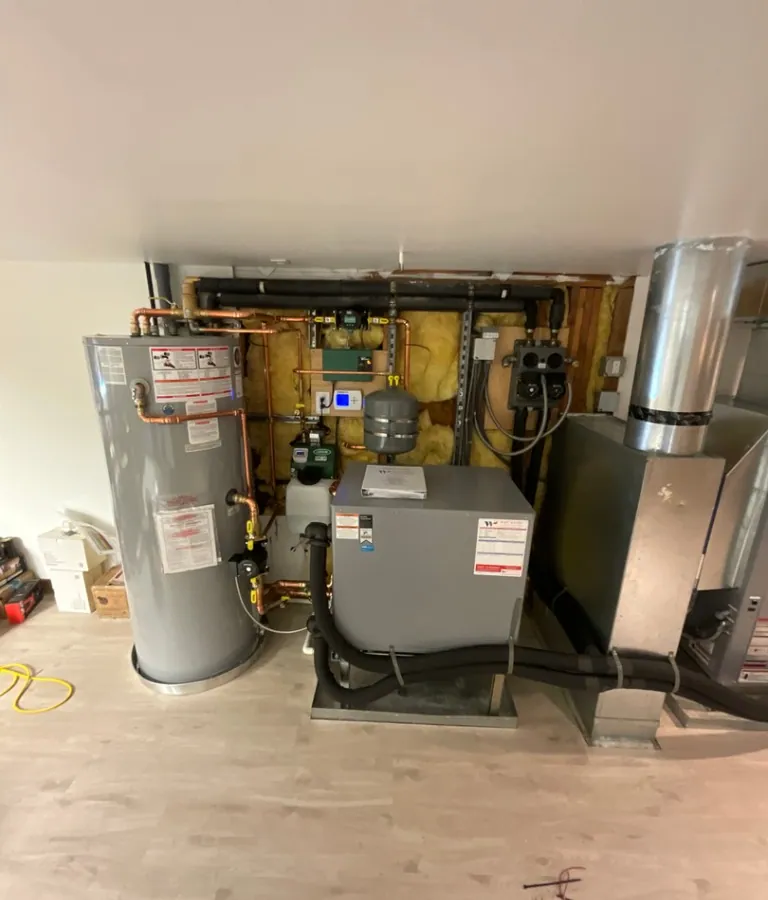
Quick answer: A condensing boiler captures extra heat from its exhaust and runs most efficiently with cooler return water, such as radiant floors. A cast-iron boiler is simpler, handles hotter water for older radiators and usually vents through a chimney.
How a Cast-Iron Boiler Works
A conventional boiler, most often built from cast iron, burns fuel to heat water in heavy iron sections, then sends the exhaust out through a flue.
Cast iron holds a lot of heat and tolerates high water temperatures, which suits older radiator and baseboard systems designed around hot water. Because the exhaust leaves the boiler hot, it rises on its own through a chimney, often with a liner. The design is simple and sturdy, with fewer electronic parts than a condensing boiler. The tradeoff is that some of the heat from combustion goes up the flue instead of into your home.
How a Condensing Boiler Works
A condensing boiler pulls extra heat out of its exhaust before it leaves the house.
Hot exhaust contains water vapor. A condensing boiler passes that exhaust over a second heat exchanger, cooling it enough for the vapor to condense into water. Condensing releases heat that a conventional boiler would send up the flue, and the boiler puts that heat back into your heating water. Because the exhaust leaves cool, it can vent through plastic pipe, usually out a side wall or the roof, and the boiler needs a drain for the condensate it produces.
Comparing the Two at a Glance
The main differences come down to efficiency, venting, drainage and the kind of heating system each one suits.
| Condensing Boiler | Cast-Iron (Conventional) Boiler | |
|---|---|---|
| Efficiency | Higher, especially with cooler return water | Lower |
| Venting | Plastic pipe through a wall or roof | Chimney or other approved venting |
| Drainage | Needs a condensate drain | No condensate to drain |
| Works Well With | Radiant floors and cooler-water systems | Older radiators and baseboard that need hotter water |
| Controls | More electronic controls and sensors | Simpler controls |
Why Return Water Temperature Matters
A condensing boiler only condenses when the water coming back to it is cool enough.
If the return water is too warm, the exhaust stays above the point where water vapor condenses, and the boiler runs more like a conventional one. Radiant floors and generously sized baseboard often return cool water, so they let a condensing boiler work at its most efficient. Older cast-iron radiators sized for hot water may keep a condensing boiler out of its condensing range on the coldest days, though it still runs well and condenses for much of the season. Outdoor reset controls help by lowering water temperature as the weather warms.
Venting and Condensate
Venting is often the deciding practical factor when you switch from one type to the other.
Replacing a cast-iron boiler with a condensing one means new plastic venting and a place to drain condensate, which is mildly acidic and usually runs through a neutralizer first. The old chimney is no longer used for the boiler. Going the other way, a cast-iron boiler needs a sound chimney or other approved venting. If the chimney is in poor shape, relining it adds work, and that can tip the decision toward a condensing boiler.
Which Heat Emitters Each Type Suits
The baseboard, radiators or radiant floors already in your home often narrow the choice.
Radiant floors pair naturally with condensing boilers because they run on cooler water. Baseboard can go either way, depending on how much of it there is in each room. Large cast-iron radiators were designed around hot water and pair easily with a cast-iron boiler, though a condensing boiler can still serve them with the right controls. A heat loss calculation and a look at your radiators or baseboard show which type fits.
Durability and Upkeep
Both types last when they're maintained, but they need different kinds of attention.
Cast-iron boilers are tolerant of water quality and have fewer electronic parts, but they still need yearly cleaning and safety checks. Condensing boilers have finer heat exchangers that are more sensitive to scale, debris and oxygen in the system water, plus condensate drains and neutralizers that need checking. Yearly boiler maintenance matters for both, and it matters more for condensing boilers.
Space, Installation and Hot Water
Condensing boilers are often compact and wall-hung, while cast-iron boilers are heavy floor units.
A wall-hung condensing boiler can free up floor space in a basement or utility room. Many condensing boilers come as combination models that also heat your household water, which can replace a separate water heater. Cast-iron boilers usually pair with a separate tank or an indirect water heater for hot water. If you want one unit to handle both heat and hot water, that often points toward a condensing combination boiler, as long as your hot water demand is moderate.
What Efficiency Ratings Tell You
Boiler efficiency is usually shown as an AFUE rating, short for annual fuel utilization efficiency.
AFUE estimates how much of the fuel a boiler burns over a season becomes heat for your home. Condensing boilers carry much higher ratings than conventional boilers because they recover heat from the exhaust. Keep in mind that the rating assumes the boiler runs in the conditions it was tested in. A condensing boiler running with hot return water all season won't reach its rated efficiency, while a well-matched conventional boiler is far more likely to run near its own rating. The match between boiler and system matters as much as the number.
Switching Types During a Replacement
Changing from cast iron to condensing, or the other way, is common during a replacement, but it changes more than the boiler.
Moving to a condensing boiler means new venting, a condensate drain and often new controls and piping near the boiler. It's also a good time to clean the heating system, since condensing boilers are sensitive to sludge and debris left from an older boiler. Moving to cast iron from a failed condensing boiler means confirming the chimney or other venting can serve it. In both directions, the heating system you already have should guide the decision.
How to Choose for Your Home
The right boiler depends on your heating system, venting, fuel and hot water needs, not on one type being better everywhere.
A home with radiant floors, room for plastic venting and an interest in combination hot water often suits a condensing boiler. A home with large radiators, a sound chimney and a preference for simple equipment may suit cast iron. West Sound Comfort Systems has been locally owned since 2016, and our owners have served Kitsap County since 1999. We install both types in existing homes across Silverdale, Bremerton, Poulsbo and Port Orchard. See boiler installation and replacement, or contact us and ask for a free estimate.
Frequently Asked Questions
Is a condensing boiler worth it?
It is most worthwhile when your system returns cool water, such as radiant floors or generous baseboard, so the boiler can condense for much of the season.
Can a condensing boiler work with old radiators?
Yes. It may not condense on the coldest days, but with the right controls it can still run efficiently for much of the heating season.
Do condensing boilers need a chimney?
No. They vent through plastic pipe, usually out a side wall or the roof, and need a condensate drain.
Which lasts longer, cast iron or condensing?
Both last when they're maintained. Cast iron is more tolerant of water quality, while condensing boilers depend more on clean system water and yearly care.
Written by
The West Sound Comfort Team
Kitsap County's locally-owned HVAC, plumbing & electrical experts with 30+ years in the industry.
(360) 564-1187