
Choosing a Home Heating System
How to choose a heating system for an existing home: furnaces, heat pumps, ductless, boilers and radiant floors, matched to the home you have.
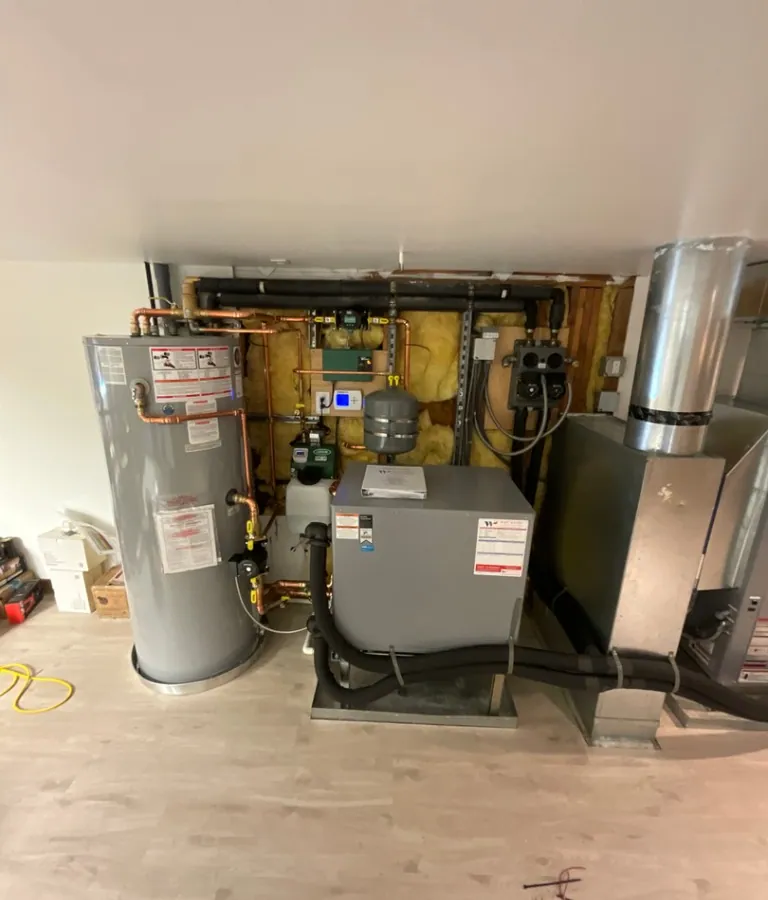
Quick answer: In an existing home, start with what's already there: ducts, radiators or baseboard, available fuel and electrical capacity. Those usually point to a furnace, heat pump, ductless system, boiler or radiant floors, or a combination of them.
Start With the Home You Have
In an existing home, the right starting point isn't the equipment; it's what your house already has.
A home with ductwork is set up for forced air. A home with radiators or baseboard is set up for hot water heat. The fuels available at your property, the size of your electrical service and the rooms that are hard to heat all narrow the options. Starting there means you build on a distribution system that already works, and it shows where a change makes sense.
Forced-Air Furnaces
A furnace heats air and pushes it through ducts to each room.
Furnaces can run on natural gas, propane, oil or electricity. They deliver heat as soon as the blower starts and work well where ducts are already in place and in good condition. A furnace doesn't cool on its own, so homes that want cooling usually pair it with a central air conditioner or a heat pump. If your ducts leak, are undersized or never reached certain rooms, a new furnace won't fix those problems by itself.
Heat Pumps
A heat pump moves heat instead of making it, which lets one system heat and cool.
In winter, a heat pump pulls heat from outdoor air and brings it inside; in summer, it reverses to cool. Ducted heat pumps use existing ductwork, much like a furnace. Many homes pair a heat pump with a furnace as a dual-fuel system, letting the furnace take over in the coldest weather. A heat pump runs on electricity, so the home's electrical service needs room for it.
Ductless Mini-Splits
Ductless systems put a heat pump to work in individual rooms without any ductwork.
An outdoor unit connects to one or more indoor heads mounted on walls or ceilings, each with its own control. Ductless systems suit homes without ducts, additions, finished basements, bonus rooms and rooms that never stay comfortable. They also work alongside an existing system, so a home with a boiler or furnace can add ductless where it needs cooling or extra heat.
Boilers and Hydronic Heat
A boiler heats water and circulates it through baseboard, radiators or radiant floor tubing.
Hydronic heat is quiet and even, with no blowing air. If your home already has radiators or baseboard, a boiler is usually the natural way to keep using them. Boilers run on gas, oil or electricity, and condensing models run efficiently with cooler-water systems. Hydronic systems don't cool, so homes that want air conditioning often add ductless heads. Our boilers and hydronic heating page covers the options in more depth.
Radiant Floor Heating
Radiant floors warm a room from the floor up, using warm water in tubing or electric cable under the flooring.
In an existing home, radiant heat is usually added during a remodel, a bathroom or kitchen renovation or an addition, when the floor is open. Hydronic radiant connects to a boiler or water heater and suits larger areas. Electric radiant suits single rooms like bathrooms. Flooring choice matters: tile and stone work especially well, while thick carpet slows the heat down. See radiant heat installation and repair.
Matching a System to Your Existing Home
A few questions about your home usually point toward the right system or combination.
- Do you have ducts? If they're sound and reach every room, a furnace or ducted heat pump can use them.
- Do you have radiators or baseboard? A boiler keeps them working; ductless can add cooling.
- Which fuels are available? Gas service, oil storage or electricity shape the options.
- Is there room on your electrical service? Heat pumps and electric boilers need capacity.
- Do you want cooling? Heat pumps and ductless cool; boilers and furnaces need a partner.
- Are some rooms always uncomfortable? A ductless head or a new zone may fix them without replacing everything.
Thinking About Hot Water Too
Your heating choice can also change how you make hot water.
A boiler can heat your household water through a combination unit or an indirect water heater. A heat pump water heater can run alongside any heating system. Furnaces and ducted heat pumps leave hot water to a separate water heater. If your water heater is aging at the same time as your heating system, planning the two together can simplify the work and free up space.
Comfort Beyond Temperature
Heating systems differ in how they feel, not just in how warm they keep the house.
Forced air changes room temperature noticeably sooner than radiant floors but moves air and can be noticeable when it runs. Hydronic heat and radiant floors are quiet and even, with no drafts. Ductless heads let each room run at its own temperature. Thinking about noise, drafts and room-by-room control helps narrow the choice as much as fuel and efficiency do.
Upgrading in Stages
You don't have to replace everything at once to get a better heating system.
Many homes improve in steps. A ductless head can solve an addition that was never connected to the main system. A heat pump can join an existing furnace as a dual-fuel setup. A new boiler can bring better controls and a combination unit for hot water. A remodel can be the moment to add radiant floors in one room. Planning the steps together keeps each upgrade working with the others.
Why Sizing Matters
Whatever system you choose, it has to be sized to the home it heats, not copied from the old equipment.
Homes change over time. New windows, added insulation and finished spaces all change how much heat the house needs. An oversized system turns on and off in short bursts, which wears parts and leaves rooms swinging between warm and cool. An undersized system runs constantly and still falls behind on cold nights. A heat loss calculation based on your home as it is today is the right way to size it.
Getting Help With the Decision
The right answer depends on your home, your comfort goals and what's already in place.
West Sound Comfort Systems has been locally owned since 2016, and our owners have served Kitsap County since 1999. We work with existing homes across Silverdale, Bremerton, Poulsbo and Port Orchard, and we explain your options in plain terms so the choice stays yours. Start with our boilers and hydronic heating page, or contact us and ask for a free estimate.
Frequently Asked Questions
What is the most efficient heating system for an existing home?
It depends on the home. Heat pumps are very efficient, and condensing boilers are very efficient with radiant floors. Matching the system to the home matters more than the label.
Can I add air conditioning to a home with a boiler?
Yes. Ductless mini-splits add cooling without ducts and work alongside a boiler.
Should I replace my furnace with a heat pump?
If your ducts are sound and your electrical service has room, a heat pump can replace or join a furnace. A dual-fuel setup keeps the furnace for the coldest weather.
Can I keep my radiators if I replace my boiler?
Usually, yes. A new boiler connects to your existing radiators or baseboard.
Written by
The West Sound Comfort Team
Kitsap County's locally-owned HVAC, plumbing & electrical experts with 30+ years in the industry.
(360) 564-1187