
Boiler Repair vs. Replacement
How to decide between repairing and replacing a boiler: failed parts vs. a failing heat exchanger, age, condition, parts and safety.
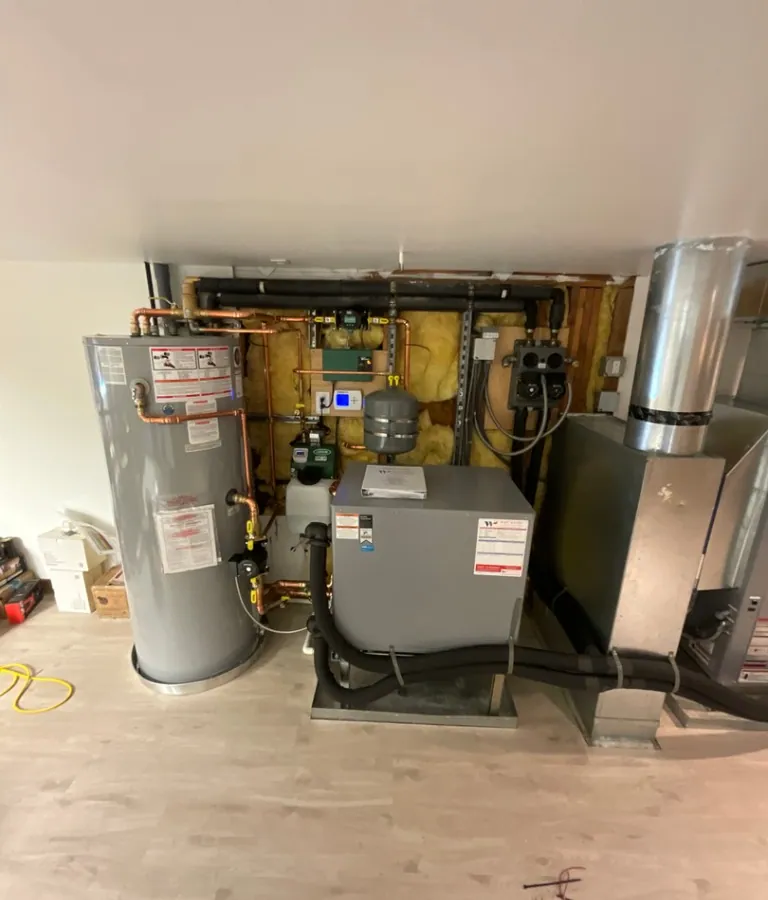
Quick answer: Repair a boiler when a single part has failed on an otherwise sound unit. Consider replacement when repairs keep coming, the heat exchanger leaks, parts are hard to find or the boiler no longer heats your home evenly.
When a Boiler Repair Makes Sense
Repair is usually the right call when one part has failed and the rest of the boiler is in good shape.
Most boiler breakdowns come down to a single component. Circulator pumps, zone valves, expansion tanks, pressure relief valves, igniters, flame sensors, thermostats and control boards all wear out on their own schedule. Replacing one of them restores the boiler without changing anything else about your system. If the heat exchanger is sound, the pressure holds steady and there's no widespread corrosion, a boiler can keep running well for a long time after a repair like this.
A repair also makes sense when the boiler is still a good match for the home. If it heats every room evenly, handles your hot water needs and burns cleanly, there's little reason to replace it because one part gave out.
Common Repairs and What They Fix
Most repairs replace one worn part, and knowing what each part does makes a repair quote easier to understand.
A circulator pump moves hot water through the pipes; when it fails, some or all of the house goes cold. A zone valve opens and closes for each thermostat; when it sticks, one area stops heating. The expansion tank absorbs the extra volume as water heats; when it fails, pressure swings and the relief valve may drip. Igniters and flame sensors light and monitor the burner; when they wear, the boiler struggles to start. None of these repairs means the boiler itself is failing.
When Replacement Makes Sense
Replacement starts to make sense when the boiler itself is wearing out, not just one of its parts.
The signs usually show up together:
- The heat exchanger is cracked or leaking.
- Repairs come more often each heating season.
- Parts for your model are discontinued or hard to find.
- Rust and corrosion have spread across the boiler and its fittings.
- The boiler can't keep the house warm on cold days, even when it's running properly.
- Combustion problems, like soot or a burner that won't stay lit, keep coming back after service.
A leaking heat exchanger is the clearest signal. The heat exchanger is the core of the boiler, so replacing it is a major repair that most homeowners weigh against a new boiler instead.
Questions to Ask Before You Decide
A few questions help you weigh a repair against a new boiler with the facts in front of you.
- How close is the boiler to the end of its expected life?
- How many repairs has it needed in the last few seasons?
- Is the heat exchanger sound, or is it leaking or corroded?
- Are parts still available for this model?
- Does the boiler heat every room evenly, or have some rooms always run cool?
- Do you want to change anything, such as your fuel, your hot water setup or the type of boiler?
It also helps to compare the repair you're facing with the ones likely to follow. If the boiler needs a pump today and its heat exchanger is already showing rust, the next repair may be a much bigger one.
If most answers point to a sound boiler that suits your home, repair it. If several point the other way, it's worth pricing a replacement before the next breakdown forces the decision.
Age Matters, but Condition Matters More
A boiler's age is a useful starting point, but condition tells you more than the date on the label.
Boilers of the same age can be in very different shape depending on how they were installed, how clean the system water has been and how regularly they were serviced. Our guide to condensing vs. cast iron boilers explains how each type tends to age. A neglected newer boiler can be in worse shape than a well-kept older one. That's why the decision should rest on what a technician finds, not on age alone.
What a Replacement Can Change
A new boiler is also a chance to rethink the system instead of swapping like for like.
Your home may have changed since the old boiler went in. New windows, added insulation, a finished basement or an addition all change how much heat the house needs, so the right size today may differ from the old unit. A replacement also opens up choices: a condensing boiler instead of cast iron, a combination boiler that handles your hot water, a switch from oil to gas, or better controls such as outdoor reset. Our guides to condensing vs. cast iron boilers and oil vs. gas boilers cover those choices in more depth.
Safety Comes Before Cost
Some boiler problems shouldn't be weighed on repair versus replacement at all until the home is safe.
If your carbon monoxide alarm sounds, you smell gas, you see smoke or the smell of fuel oil is strong, leave the house and call your gas utility or emergency services from outside. For a faint fuel oil smell, turn the boiler off at its emergency switch, ventilate the area and call for service. Soot or scorch marks around the burner, water pooling near the controls, or a boiler that keeps tripping its safety limits all need a technician's attention before the boiler runs again. Once the immediate problem is handled, the repair or replace question can wait for a full diagnosis.
How Maintenance Shapes the Decision
Yearly maintenance affects both sides of the choice, because it keeps small problems small and gives you a record of the boiler's condition.
A boiler that's cleaned and checked every year tends to have fewer surprise failures, and each visit shows how the heat exchanger, burner and controls are holding up. When the time comes to decide, that history makes the answer clearer. If your boiler hasn't been serviced recently, boiler maintenance is a good first step before any big decision.
Getting a Clear Answer for Your Boiler
The most reliable answer comes from a full diagnosis of your boiler and the system around it.
West Sound Comfort Systems has been locally owned since 2016, and our owners have served Kitsap County since 1999. We repair and replace boilers in existing homes across Silverdale, Bremerton, Poulsbo and Port Orchard, and we explain what we find so the choice stays yours. Learn more about boiler repair and boiler installation and replacement, or contact us and ask for a free estimate.
Frequently Asked Questions
Is it worth repairing an old boiler?
Often, yes, if the problem is a single part and the heat exchanger is sound. If the heat exchanger leaks or repairs keep piling up, replacement usually makes more sense.
What is the most expensive boiler repair?
A leaking or cracked heat exchanger. It's the core of the boiler, so most homeowners weigh it against a new boiler.
Can a boiler be too old to repair?
When parts for a model are discontinued, repairs can become impractical even if the boiler still runs. That's often when replacement becomes the better path.
Should I replace my boiler before it fails?
If several warning signs point to the end of its life, planning a replacement lets you choose the right boiler on your schedule instead of in the middle of a cold snap.
Written by
The West Sound Comfort Team
Kitsap County's locally-owned HVAC, plumbing & electrical experts with 30+ years in the industry.
(360) 564-1187