
Boiler Cost Guide: Key Factors
What shapes the price of a new boiler or boiler repair: boiler type, fuel, venting, piping, controls, hot water, removal and long-term running costs.
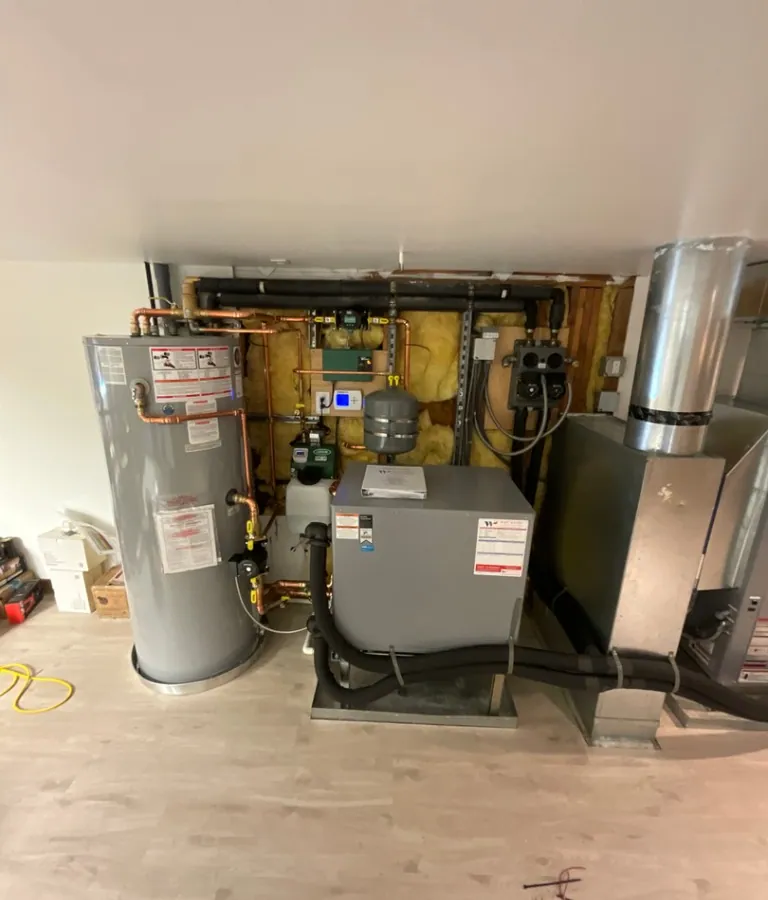
Quick answer: Boiler cost depends on the boiler type, fuel, venting changes, the condition of your piping and heating system, controls, hot water needs and removal of the old unit. An in-home evaluation is the only way to get an accurate price.
Why Boiler Prices Vary So Much
Two boiler projects can look alike from the outside and still be priced very differently.
A boiler replacement isn't just the price of the boiler. It includes the venting, the piping that connects the boiler to your heating system, the controls, the hot water setup and the work of removing the old unit. Each of those depends on your home. That's why a price quoted over the phone, without seeing the boiler room, is rarely the number you end up paying. The sections below cover what moves the price up or down.
Boiler Type
The type of boiler you choose is one of the largest factors in the price.
Condensing boilers usually cost more up front than conventional cast-iron boilers because of their second heat exchanger, electronic controls and condensate handling. They can cost less to run, depending on your fuel prices and system, especially with radiant floors or other systems that return cool water. Combination boilers, which also heat your household water, cost more than heat-only boilers but can replace a separate water heater. Our guide to condensing vs. cast iron boilers explains how the two compare.
Fuel and Conversions
Staying with the same fuel usually keeps a project simpler than switching fuels.
Replacing a gas boiler with a gas boiler, or an oil boiler with an oil boiler, reuses the existing fuel supply. An oil-to-gas conversion adds a gas line to the boiler and work on the old oil tank. Electric boilers avoid venting and fuel lines but may need upgrades to your electrical service. Our guide to oil vs. gas boilers covers that choice.
Venting Changes
Venting can be a small part of the job or a significant one, depending on what you have and what you choose.
Replacing a conventional boiler with another conventional boiler often reuses the chimney, though an old chimney may need a liner. Switching to a condensing boiler means new plastic venting through a wall or roof and a condensate drain. The length and route of the venting, and how easy it is to reach an outside wall, affect the amount of work involved.
Piping and the Existing Heating System
The condition of your pipes, baseboard, radiators and radiant tubing affects what else the project needs.
A new boiler connects to your existing distribution system, so the pipes and fittings near the boiler often need updating. Old circulator pumps, zone valves and expansion tanks may be replaced at the same time. If the system has corrosion, sludge or leaks, cleaning or repairs may be needed to protect the new boiler, especially a condensing one with a finer heat exchanger.
Controls and Hot Water
Controls and hot water choices add to the price but also shape comfort and running costs.
Outdoor reset controls, zone controls and new thermostats help the boiler run evenly and efficiently. If you heat your household water from the boiler, an indirect water heater or a combination boiler adds to the project, and the size you need depends on how many people use hot water at the same time.
Removing the Old Boiler
Removing an old boiler takes real work, and it's part of the price.
Cast-iron boilers are heavy and often sit in tight basements. Removal includes disconnecting the old boiler, draining the system and hauling the equipment away. If the boiler room needs changes to fit the new unit, that adds to the job as well.
What Affects Repair Costs
Repair costs depend on the part, how easy it is to reach and how long the diagnosis takes.
Common repairs, such as replacing a circulator pump, zone valve, igniter or expansion tank, are usually far smaller jobs than replacing a boiler. A leaking heat exchanger is the major exception, since it's the core of the boiler. Our guide to boiler repair vs. replacement explains how to weigh the two.
Running Costs Over Time
The price you pay up front is only part of the cost of owning a boiler.
Fuel prices, the boiler's efficiency, how well it matches your heating system and how well it's maintained all shape what you spend each heating season. A right-sized boiler with good controls tends to run more evenly than an oversized one that turns on and off in short bursts. Yearly boiler maintenance keeps the burner, heat exchanger and controls in the condition they were designed to run in.
Questions to Ask When Comparing Estimates
Comparing boiler estimates is easier when each one answers the same questions.
- Was the boiler sized from a heat loss calculation for your home, or from the old boiler's label?
- What venting work is included, and will the chimney be used, lined or retired?
- Which pumps, valves, expansion tanks and controls are being replaced?
- How will your household hot water be handled?
- Is removal of the old boiler included?
- What does the warranty cover, and for how long?
Two estimates that answer these questions differently aren't really pricing the same job.
Planning Ahead Instead of Waiting for a Breakdown
Replacing a boiler before it fails gives you more control over the choices that drive the price.
A boiler that dies in the middle of winter forces a decision under pressure. Planning ahead gives you time to compare boiler types, think about a fuel change, look at hot water options and line up financing if you need it. If your boiler is showing several warning signs, our guide to signs your boiler is failing can help you decide when to start planning.
How to Get an Accurate Price
An in-home evaluation is the only way to get a price that reflects your home, your system and your choices.
West Sound Comfort Systems offers free estimates and upfront pricing before work begins, and financing is available. We have been locally owned since 2016, and our owners have served Kitsap County since 1999, installing and repairing boilers in existing homes across Silverdale, Bremerton, Poulsbo and Port Orchard. See boiler installation and replacement, or contact us and ask for a free estimate.
Frequently Asked Questions
How much does a new boiler cost?
It depends on the boiler type, fuel, venting, piping, controls, hot water setup and removal of the old unit. An in-home evaluation gives you an accurate price for each option.
Is a condensing boiler more expensive?
Usually up front, because of its second heat exchanger, controls and condensate handling. It can cost less to run with radiant floors or other cooler-water systems.
Does switching from oil to gas cost more?
A conversion adds a gas line and work on the old oil tank, so it's usually a larger project than a same-fuel replacement.
Do you offer financing for a new boiler?
Yes. Financing is available. See our financing page for details.
Written by
The West Sound Comfort Team
Kitsap County's locally-owned HVAC, plumbing & electrical experts with 30+ years in the industry.
(360) 564-1187